Hard Drive Shredding in Dallas: A Complete Guide for Companies
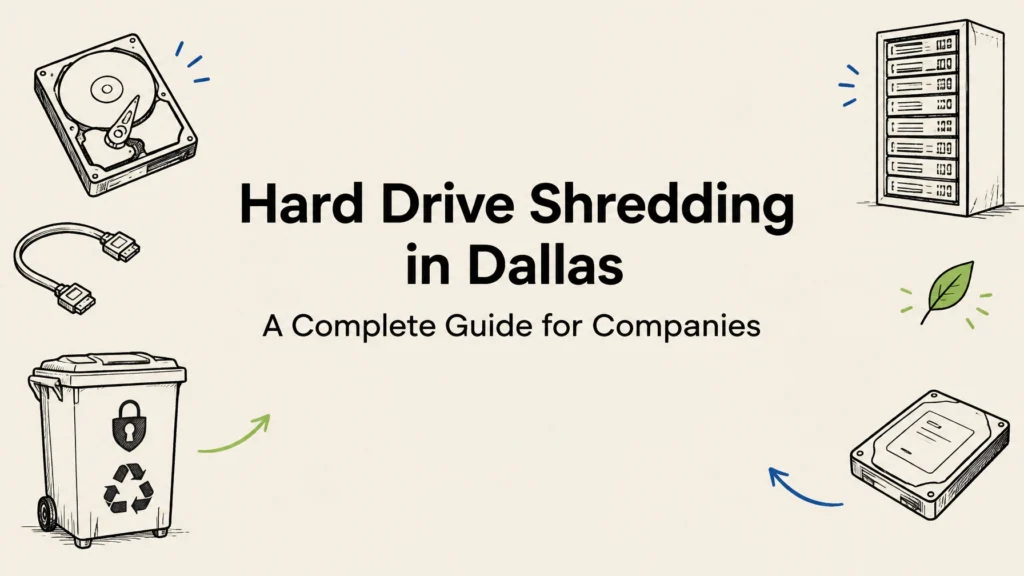
For Dallas companies retiring hard drives, shredding is a practical way to make data-bearing media unusable and document its final disposition. Choose on-site or off-site service based on your security needs and operations, then confirm that each drive is tracked and covered by a certificate of destruction. When a software wipe is suitable, it can […]
Data Destruction Services in Atlanta: What Businesses Need to Know
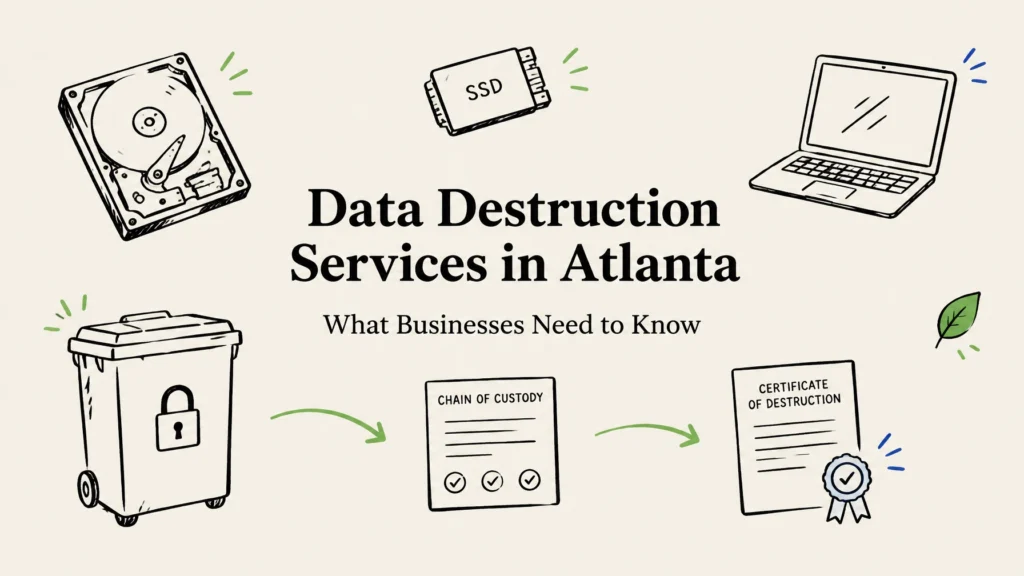
Atlanta businesses can protect sensitive information by matching each device to an appropriate sanitization or destruction method, controlling every handoff, and keeping asset-level records. Working devices may be suitable for a verified wipe and reuse, while failed or high-risk drives may need physical destruction. A clear process and a detailed certificate of destruction help you […]
Michigan Electronics Recycling: A Secure Guide for Businesses
For secure business electronics recycling in Michigan, inventory your equipment, protect data-bearing devices, and choose a disposal route that fits your volume and risk. Michigan allows certain consumer electronics to be managed as universal waste, so don’t treat old business electronics as routine trash; check the rules that apply to your items and handling plan. […]
Michigan IT Asset Disposition: A Business Guide to Secure ITAD
For Michigan organizations, IT asset disposition (ITAD) is the secure, documented process for retiring, collecting, sanitizing, reusing, reselling, or recycling business technology. A sound ITAD plan helps protect sensitive data, create a clear record of what happened to each asset, and recover value from equipment that still has a useful life. If retired laptops, servers, […]
How to Remove a Hard Drive Safely: Steps for Laptops, Desktops, and Servers
To remove a hard drive safely, shut down the device, disconnect its power, and follow the manufacturer’s instructions to release the drive from its bay, connector, or mounting bracket. Handle it by the edges and keep it in an antistatic bag. Remember: removing a drive does not erase the data on it. That last point […]
IT Asset Disposal Form: What to Include and How the Process Works
An IT asset disposal form records what equipment is leaving service, who approved its retirement, how its data was handled, and where it went. It connects the physical handoff to the organization’s asset register, financial records, and audit evidence. A good form follows the asset from the decision to dispose through its final disposition. What […]
Asset Inventory Management: How to Keep a Live, Audit-Ready IT Asset List
Asset inventory management is the process of keeping a current, reliable record of the technology your organization owns, where each item is, who is responsible for it, and what stage of its lifecycle it is in. A live inventory is updated as equipment is purchased, assigned, moved, repaired, stored, or retired, so you can answer […]
Asset Tagging System: How to Label and Track IT Assets From Day One to Disposal
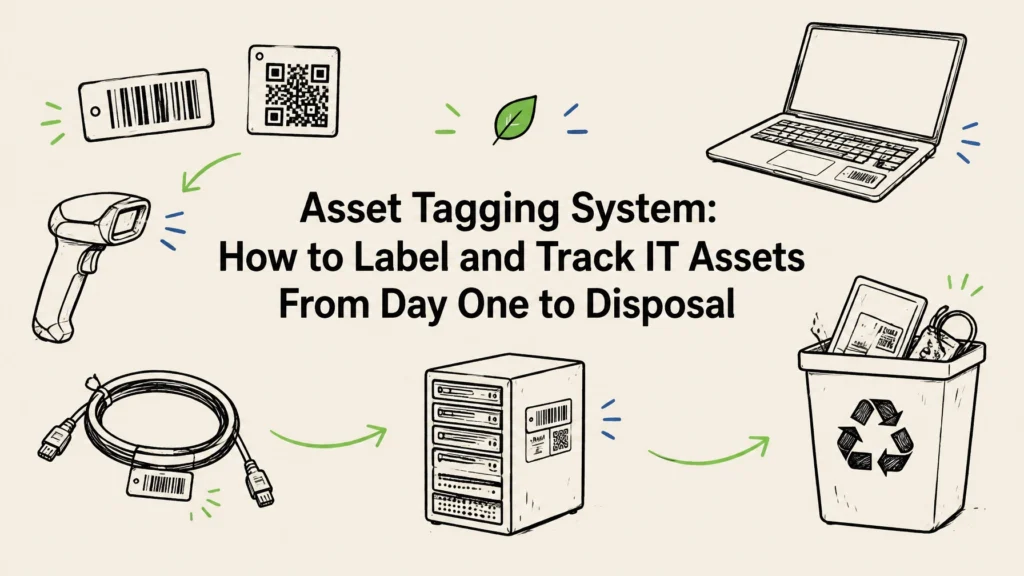
An asset tagging system gives each IT asset a unique identifier and links that identifier to a record of the device’s owner, location, condition, and lifecycle status. It helps you track hardware from receiving and deployment through repair, reassignment, and final retirement. The tag is only the starting point: the system works when people update […]
Chain of Custody Documentation for ITAD: What a Defensible Record Must Include
Chain of custody documentation is the record that shows who handled an IT asset, when and where each handoff occurred, and what happened to the device and its data. For ITAD, a defensible record links an identifiable asset from its original location through transport, data sanitization or destruction, and final disposition, with evidence to support […]
What Is Chain of Custody in ITAD? A Plain-English Guide for Businesses
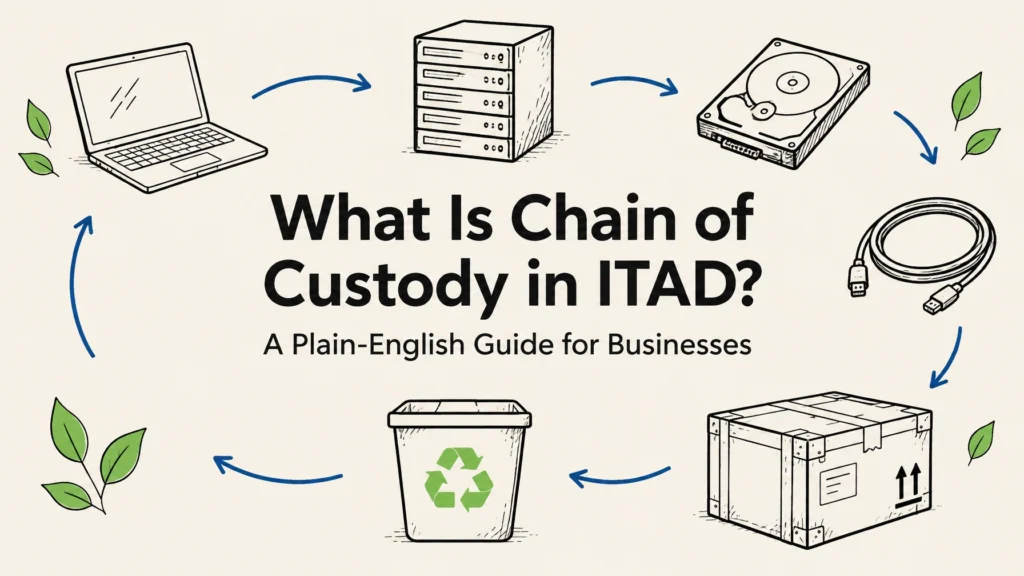
Chain of custody in ITAD is the process of tracking and controlling IT equipment from the moment it leaves your organization until it reaches its final destination. It helps show who handled each asset, where it went, and whether it was wiped, shredded, reused, or recycled as planned. In plain English, it’s how you make […]