For businesses in and around Monroe, Louisiana, data center decommissioning is far more than just an IT cleanup task. It's a strategic decision. When handled correctly, it strengthens your security, keeps you compliant with environmental rules, and can even unlock value from old equipment. It’s a chance to turn a logistical headache into a real opportunity for your company and community.
Why Decommissioning Is a Strategic Move for Monroe Businesses
The tech scene in Northern Louisiana is heating up, and your IT infrastructure is right in the middle of it. Getting rid of old data center gear isn't just about unplugging servers anymore. It’s a critical moment for IT managers, sustainability leaders, and executives to rethink their entire approach to technology. For any company in Monroe, a smart plan for computer recycling and IT equipment disposal is key to staying competitive, secure, and responsible.
Many Monroe businesses are discovering that upgrading their systems—often by moving from on-premise servers to the cloud—is what kicks off the need to decommission physical hardware. If that sounds like your situation, this on-premise to cloud migration playbook offers some great insights. This shift isn't just about new tech; it's about responsibly handling the old.
Aligning with Regional Tech Advancements
Major projects, like Meta's new hyperscale facility in nearby Richland Parish, are setting a blistering pace for the entire region. That project alone is expected to bring nearly 6,000 construction workers to the Monroe area by April 2026.
What does that mean for you? History shows that this kind of large-scale tech investment accelerates everything. The rapid advances in AI and cloud computing can make up to 25% of server hardware obsolete in just 3-5 years. This isn't just a trend; it's a new reality that makes proactive IT asset disposition (ITAD) a must-have, not a nice-to-have.
Holding onto outdated equipment is a growing liability. You're facing:
- Increased Security Risks: Older gear often stops getting the firmware and software updates needed to protect against modern cyberattacks.
- Higher Operating Costs: Legacy systems are power hogs and demand constant maintenance, eating into your budget.
- Lost Value: The longer you wait, the less your old assets are worth. You're missing out on potential returns from resale or corporate donation programs.
A well-thought-out data center decommissioning plan helps your Monroe business get ahead of these risks. It's about clearing out the old to make room—both physically and financially—for what's next.
Turning Obligation into Opportunity
Yes, managing IT asset disposition is a compliance issue. But if you only see it as a box to check, you're missing the point. A strategic approach turns this duty into a real business advantage.
Instead of just a cost, think of it as a chance to gain:
- Rock-Solid Data Security: A professional decommissioning process guarantees your data is completely destroyed. Using certified methods that meet strict industry standards gives you an auditable paper trail and protects you from devastating data breaches.
- A Commitment to the Environment: Working with a certified e-waste recycler ensures your old equipment is handled the right way, keeping hazardous materials out of our landfills. This commitment to sustainability isn't just good for the planet; it resonates with customers and strengthens your brand. You can learn more about the benefits of e-waste recycling in our detailed guide.
- Financial Returns and Community Impact: Strategic decommissioning can actually put money back into your budget through equipment buyback programs. When you work with a social enterprise like Reworx Recycling, you take it a step further. Your old equipment can be refurbished and donated, supporting local programs and helping bridge the digital divide right here in Louisiana.
When you partner with a donation-based recycling provider like Reworx Recycling, you’re not just getting rid of hardware. You’re becoming part of a circular economy that helps your bottom line, the environment, and your local community. It turns a routine task into a powerful story of corporate social responsibility.
Here is a quick overview of the essential stages, key activities, and primary goals for any data center decommissioning project in the Monroe area.
Monroe Data Center Decommissioning Project Phases at a Glance
| Phase | Key Activities | Primary Goal |
|---|---|---|
| 1. Planning & Scoping | Asset inventory, stakeholder meetings, budget definition, project timeline creation. | Establish clear objectives, scope, and a detailed plan of action. |
| 2. Security & Data Destruction | Data migration, secure data erasure (wiping), physical destruction of drives. | Prevent data breaches and ensure 100% data sanitization. |
| 3. Logistics & On-site Work | Equipment disconnection, de-racking, on-site packaging, and palletizing. | Safely and efficiently prepare all assets for transport. |
| 4. Transportation | Secure chain-of-custody transport from your Monroe facility to the processing center. | Ensure assets are securely moved without loss or damage. |
| 5. Disposition & Recycling | Asset testing, sorting, remarketing (resale), or responsible recycling. | Maximize value recovery and ensure environmental compliance. |
| 6. Reporting & Certification | Issuance of Certificates of Destruction, recycling reports, and asset settlement. | Provide auditable proof of compliance and project completion. |
This table provides a high-level roadmap, but every project is unique. The key is to partner with an expert who understands the nuances of each phase and can tailor the process to your specific needs.
Crafting Your Decommissioning Project Plan
A successful data center decommission doesn't start when the first server is powered down. It starts much, much earlier with a rock-solid project plan. For IT and facilities managers in Monroe, this plan is your playbook, turning what seems like a monumental task into a series of clear, manageable steps.
Think of it this way: you wouldn't move your entire business without an office moving checklist to keep things on track. Decommissioning your data center, whether for an office cleanout or a full facility cleanout, demands a detailed roadmap to handle the intricate dance of security, logistics, and compliance.
From day one, your strategy has to balance three critical pillars: keeping your data secure, staying compliant, and getting the most value back from your old equipment.
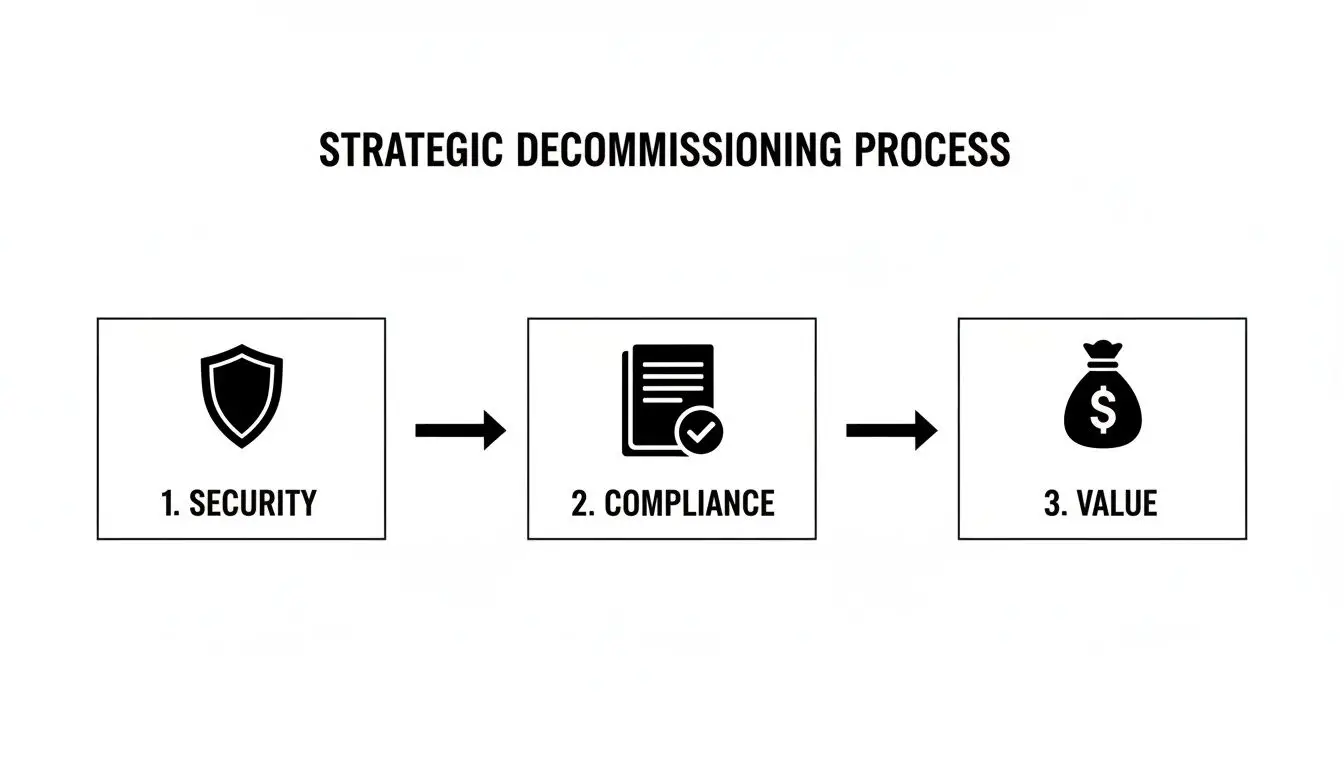
As you can see, security, compliance, and value aren't sequential stages. They're parallel tracks that you need to manage from the very start to the very end of the project.
Create a Detailed Asset Inventory
First things first: you need to know exactly what you’re dealing with. This means creating a complete, granular inventory of every single piece of equipment you plan to decommission. I’m not just talking about counting servers. You need a list that covers everything from racks and storage arrays down to the last cable and power distribution unit.
A proper inventory should include:
- Asset Type: Server, switch, router, PDU, rack, etc.
- Manufacturer & Model: For example, Dell PowerEdge R740 or Cisco Catalyst 9300.
- Serial Number: Absolutely essential for tracking and maintaining a chain of custody.
- Physical Location: Aisle, rack number, and U-position.
- Data-Bearing Status: Pinpoint every single device that holds data. This is non-negotiable for the data destruction phase.
This detailed log is the backbone of your project. It drives your budget, sets your timeline, and, most critically, shapes your data security strategy. It will become the master document you use to track each asset all the way to its final destination.
Define Your Scope and Set a Realistic Timeline
With your inventory in hand, you can clearly define the project's scope. Are you clearing out an entire data hall or just a few racks? Is it a complete facility shutdown or a simple hardware refresh? Getting this clarity upfront is the best way to prevent scope creep—the silent killer of budgets and deadlines.
I’ve seen this happen before. A healthcare provider in Monroe was planning an infrastructure upgrade and initially only scoped the server decommissioning. But a proper analysis showed they also needed to remove outdated medical equipment disposal needs, networking gear, UPS systems, and all the associated cabling to meet new power and cooling demands. Catching this early saved them from a mountain of expensive change orders and frustrating delays.
Your timeline needs to be grounded in reality, with buffers built in for potential bottlenecks. Make sure you account for data migration, security reviews, the physical work of de-racking, and transportation. A rushed project is where mistakes—and data breaches—are born.
Assign Roles and Lock Down the Budget
A decommission project is a team sport. You need a dedicated group with clearly defined roles, pulling in stakeholders from across the organization.
Your core team should look something like this:
- IT Manager: The project lead who oversees the entire technical process, from data migration to the final asset inventory.
- Facilities Manager: The expert on the ground, managing the physical site work like power-down sequences and coordinating logistics.
- Security/Compliance Officer: The guardian of your data, ensuring every destruction process meets company policies and regulatory mandates like HIPAA or SOX.
- Finance Representative: The person tracking the budget and overseeing the process of getting money back for your old assets.
When it comes to the budget, you have to think beyond just the cost of a vendor picking up your equipment. A realistic budget accounts for all the moving parts:
- Labor Costs: This includes time for your internal staff and any external contractors.
- Logistics and Transportation: Secure packing, palletizing, and insured transport are must-haves.
- Data Destruction Services: Whether you choose certified wiping or physical shredding, this has a cost.
- Recycling and Disposal Fees: For any assets that have no resale value.
- Contingency Fund: Always set aside 10-15% of the total budget for the unexpected. Trust me, something will come up.
Working with an experienced partner like Reworx Recycling can make this whole planning phase a lot smoother. We regularly help Monroe businesses build out these comprehensive plans, providing everything from inventory templates to budgeting guidance. If you're looking for a solid framework to get started, you can check out our guide on creating a server decommissioning checklist to make sure no detail gets overlooked.
Executing Flawless Data Destruction and Asset Removal
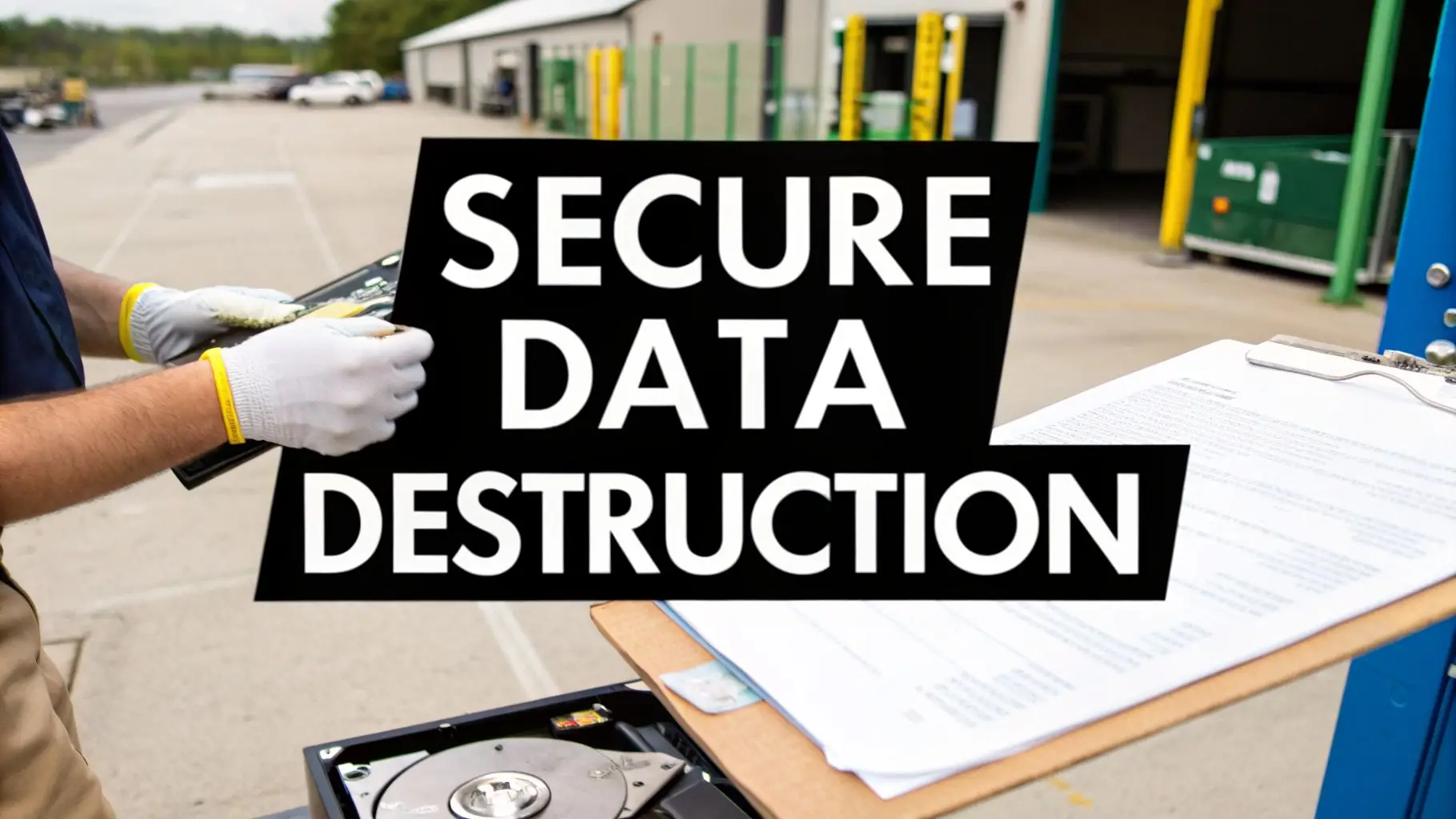
Once your project plan is locked in, you get to the phase where the rubber really meets the road: secure data destruction and physically pulling the hardware. For any IT manager navigating a data center decommissioning in Monroe, Louisiana, this is the most critical stage. There's simply no room for error when you're dealing with customer records, proprietary company secrets, or employee data.
The whole process has to be airtight, completely auditable, and carried out with surgical precision. One slip-up can lead to a catastrophic data breach. This part of the job demands a solid grasp of data sanitization standards, plus the logistical know-how to get equipment dismantled and moved without bringing your day-to-day operations to a halt.
Choosing the Right Data Destruction Method
The right method for destroying data isn't a one-size-fits-all answer. It's dictated by your company’s own security policies and the regulations you operate under—whether you’re a hospital bound by HIPAA or a financial firm governed by GLBA. The gold standard in our industry is the National Institute of Standards and Technology (NIST) Special Publication 800-88.
Following these guidelines isn't just a good idea; it’s your best defense against liability. Here are the three main methods that meet NIST standards:
- Certified Data Wiping (Clear & Purge): Think of this as a software-based deep clean. The process overwrites every single sector of a hard drive with random data, making the original information impossible to recover. It's the perfect choice for newer, high-value drives you plan to resell or use elsewhere, since the hardware remains functional.
- Degaussing: This technique uses a beast of a magnet to create a powerful field that instantly wipes all data from magnetic storage like traditional hard drives and tapes. It's incredibly effective, but it also renders the drives completely useless. After degaussing, recycling is their only option.
- Physical Shredding (Destroy): When you need the absolute highest level of security, nothing beats product destruction. We’re talking industrial-grade shredders that chew up hard drives, SSDs, and other media into tiny, mangled pieces. This is the only way to guarantee that data on damaged or non-working drives is gone for good.
For businesses in Monroe planning upgrades, working with a certified recycler like Reworx Recycling ensures you’re compliant with NIST 800-88 standards. Our secure hard drive shredding destroys 100% of sensitive data on decommissioned drives. You can even find additional context about the region's evolving data infrastructure and see how it’s affecting local companies.
No matter what, getting a Certificate of Data Destruction is non-negotiable. This document is your official, auditable proof that every asset, listed by serial number, was destroyed according to industry standards. It's your evidence of due diligence.
Managing On-Site Logistics and Removal
After the data-bearing devices are handled, the heavy lifting begins. But this is so much more than just moving boxes. It requires a systematic plan to safely dismantle, pack, and transport tons of equipment, often from a live or recently active environment.
Here’s what effective on-site logistics look like in practice:
- Systematic De-racking: Technicians follow a clear plan to disconnect, un-mount, and carefully pull servers, switches, and other gear from their racks. It has to be done methodically to avoid damaging anything nearby.
- Asset Tagging and Reconciliation: As each piece of equipment comes out, it’s scanned and checked against the master inventory list you made during planning. This step is crucial for ensuring every asset is accounted for, from rack to final disposition.
- Secure Packing and Palletizing: Equipment gets wrapped in anti-static materials and, if needed, placed in custom crates. From there, assets are securely stacked on pallets and shrink-wrapped for safe transport.
A big decision for Monroe businesses is whether to have destruction done on-site or off-site. On-site shredding, where a mobile shredding truck pulls up to your facility, offers the highest level of security. You can literally watch the drives being destroyed. Off-site destruction, performed at a secure, certified facility, is often more cost-effective, especially for larger projects.
Reworx Recycling offers both on-site and off-site options, built around your security needs and schedule. Our team handles every step with verified security, ensuring minimal disruption. To get a better feel for our process, learn more about our secure data destruction services and see how we protect your organization.
Maximizing Your Return Through IT Asset Disposition
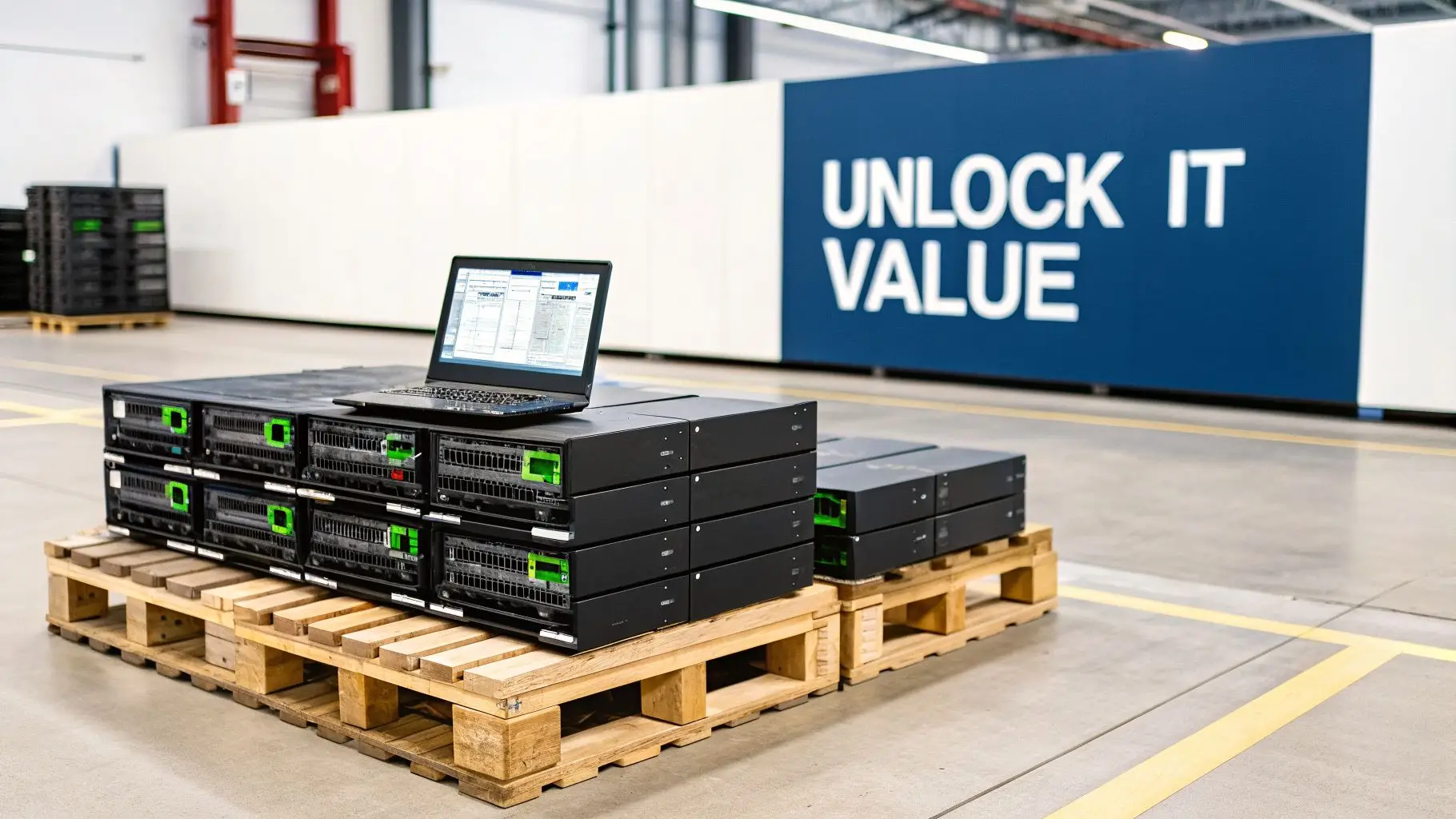
Once your data is wiped and secure, you’re left with stacks of physical hardware. This is where IT Asset Disposition (ITAD) comes in, and it's your biggest opportunity to turn what looks like a cost center into a source of revenue. A smart ITAD strategy isn't just about hauling away old gear; it’s about finding the hidden value in every server, switch, and stick of RAM.
For any data center decommissioning Monroe Louisiana project, you generally have three paths to choose from: remarketing, recycling, and donation. Knowing the ins and outs of each will help you build a plan that hits your financial targets and reflects your company's values.
The Financial Upside of Equipment Buyback Programs
Don’t just write off your retired equipment as junk. Enterprise-grade hardware, even after a few years of solid use, often has plenty of life—and value—left in it. We see this all the time, especially with components like CPUs, memory (RAM), and large-capacity storage drives.
This is exactly what equipment buyback programs are for. A good ITAD partner will assess, test, and purchase your viable assets, putting money directly back into your budget.
The single most important part of a successful buyback is a clean, detailed inventory. The more you know about your equipment—manufacturers, models, and specs—the faster and more accurately a partner can get you a quote.
As Monroe and the surrounding region see growth from major tech investments, smart financial moves become even more critical. We’ve seen mid-sized companies and even government agencies recover 10-20% of their original asset value through these programs. You're not just turning e-waste into revenue; you're also cutting your project's carbon footprint by as much as 75% compared to landfilling. You can discover more about the region's evolving economic and infrastructure landscape here.
Comparing IT Asset Disposition Options for Monroe Businesses
To help you decide the best approach for your retired assets in Monroe, it's useful to see the primary ITAD strategies compared directly.
| Disposition Method | Potential Financial Return | Environmental Impact | Community Benefit | Best For |
|---|---|---|---|---|
| Remarketing/Buyback | High | Positive (promotes reuse) | Indirect | Newer, high-value assets (servers, networking gear) |
| Responsible Recycling | Low to None | High (prevents pollution) | Indirect | Obsolete or non-functional equipment |
| Donation-Based Model | Tax Benefits | High (extends asset life) | High (direct impact) | Functional but older assets (laptops, desktops) |
In reality, the most effective ITAD plans usually use a blend of all three, creating a custom strategy based on the specific equipment you're decommissioning.
The Social Enterprise Advantage
While a buyback program gives you a direct financial return, there's another powerful way to create value from your old equipment: donation. When you partner with a social enterprise recycling provider like Reworx Recycling, you add a completely different dimension to your decommissioning project.
Instead of being broken down for parts, functional equipment like laptops, monitors, and desktops can be professionally refurbished and given a second chance. These devices go directly to schools, local non-profits, and workforce development programs right here in Louisiana, helping to close the digital divide in our communities.
This approach lets you tell a powerful story about corporate social responsibility. You’re not just managing e-waste; you are actively investing in your community. It builds your brand's reputation and creates a tangible impact that goes far beyond a simple financial transaction.
To dive deeper into this topic, check out our complete guide on maximizing value through IT asset disposition.
Navigating Environmental Regulations in Louisiana
Let's be honest, staying compliant during a data center decommissioning is a huge deal. It’s absolutely non-negotiable. For any business in Monroe, figuring out the environmental and regulatory side of things is a critical piece of the puzzle.
Getting this wrong can lead to hefty fines, legal headaches, and a black mark on your company's reputation. A single misstep in how you handle electronics recycling can create problems that linger for years.
Think about the hardware you're retiring. It’s full of materials that need to be handled with care. Things like circuit boards, batteries, and even old wiring can contain lead, mercury, and cadmium. If that stuff finds its way into a landfill, it can seep into the soil and groundwater, creating a serious environmental risk right here in Louisiana.
The Importance of Certified Recycling
This is exactly why you can't just hand your old equipment to any "recycler." You need to partner with a certified professional.
Look for vendors with certifications like R2 (Responsible Recycling) and RIOS (Recycling Industry Operating Standards). These aren't just fancy logos for a website; they are your assurance that a partner follows the highest industry standards for environmental protection, data security, and worker safety.
An R2/RIOS certified partner guarantees:
- A documented chain of custody for every single asset.
- A strict zero-landfill policy for all electronic waste.
- Secure and verified data destruction processes.
- Full compliance with all local, state, and federal regulations.
Choosing a certified partner for your Monroe data center decommissioning is the single best way to manage your risk. It effectively shifts the liability for proper disposal from you to an expert who provides all the documentation to prove it.
By working with a certified recycler like Reworx Recycling, you ensure every piece of equipment is handled responsibly. It’s an investment in peace of mind and a demonstration of your company’s commitment to corporate social responsibility.
Understanding Louisiana and Federal E-Waste Rules
Here's something important to know: Louisiana doesn't have a specific state-mandated e-waste program for businesses. However, that doesn't mean you're off the hook.
All commercial operations are still governed by the federal Resource Conservation and Recovery Act (RCRA). The U.S. Environmental Protection Agency (EPA) classifies certain electronic components—especially old CRT monitors and batteries—as hazardous waste.
That means your business is legally responsible for making sure these items are disposed of correctly. Just tossing them in a dumpster can result in significant penalties. The EPA's rules are clear: businesses have to manage their e-waste in a way that protects both human health and the environment.
The challenge is often made worse by regulatory gaps. For instance, data from FracTracker's National Data Centers Tracker shows that some facilities exploit loopholes to avoid proper environmental oversight. This just highlights how crucial it is to be transparent and responsible with your decommissioning project. You can read more about these data center oversight challenges to see the bigger picture.
A Clear Path to Compliance with Reworx Recycling
Reworx Recycling makes compliance simple for Monroe businesses. Our certified processes and unwavering zero-landfill commitment ensure you don’t just meet the rules, but you actually exceed them.
We provide full reporting and Certificates of Destruction, giving your sustainability and compliance teams the auditable records they need for their own peace of mind.
When you turn your retired IT assets over to us, you’re taking a definitive step to protect our local environment. You're also supporting a social enterprise that gives usable technology a second life through donation, creating a positive impact throughout Louisiana.
For a deeper dive into our methods, feel free to explore our guide on responsible Louisiana electronics recycling. Let us help you build an ethical decommissioning strategy that makes your business stronger from every angle.
Your Questions on Monroe Data Center Decommissioning Answered
We get it—shutting down a data center brings up a lot of questions. It’s a big project, and you want to get it right. Here, we’ll tackle some of the most common questions we hear from IT and facilities managers in the Monroe area.
We’re covering everything from project costs and timelines to the differences between on-premise and co-location facilities. You’ll get straight, practical answers to help you move forward with confidence.
How Much Should We Budget for a Decommissioning Project?
This is always the first question, and the most honest answer is: it depends. The cost of a data center decommissioning in Monroe, Louisiana, isn’t a single flat fee. It’s a combination of different services, each contributing to the final price.
Let’s break down the main cost drivers:
- Project Size: The number of racks, servers, and other assets is the biggest variable. A small, five-rack cleanup is naturally going to cost less than a full data hall clear-out.
- Data Destruction Method: On-site shredding gives you maximum security but usually comes at a higher price than off-site destruction or certified data wiping.
- Logistics Complexity: The physical location of the data center, how easy it is to get in and out, and the amount of labor needed for de-racking all play a role in the cost.
- Asset Value: This is a big one. The potential resale value of your equipment can significantly offset the project’s total cost, sometimes even turning it into a revenue-positive event.
As a rough guideline, businesses in the Monroe area can see project costs range from a few thousand dollars for smaller jobs to tens of thousands for more complex, large-scale facility shutdowns. The only way to get a firm number is to ask for a detailed, line-item quote from a partner you trust.
How Long Does a Decommissioning Project Take?
Just like the cost, the timeline can vary quite a bit. A small, five-to-ten rack project might be wrapped up in a single day of on-site work after a week or two of planning. On the other hand, a full facility decommission could take several weeks from the initial inventory to the final report.
A typical project flows through these stages:
- Planning & Quoting: 1-2 weeks
- Scheduling & Logistics: 1 week
- On-site Execution: 1-5 days (depending on size)
- Off-site Processing & Reporting: 1-2 weeks
The most common reason for delays? Rushing the planning phase. Taking the time upfront to build a thorough asset inventory and a clear project scope will save you from frustrating and expensive delays down the road.
On-Premise vs. Co-location Decommissioning What's the Difference?
While the core principles of secure data destruction and sustainable recycling stay the same, the logistics can look very different depending on where your equipment is housed.
- On-Premise: You’re in the driver’s seat. This gives you complete control over scheduling work during off-hours to minimize disruption, and your team has free rein. The flip side is that you’re solely responsible for everything from site security to the power-down sequence.
- Co-location: You’ll need to work closely with the data center operator. They have their own set of rules for site access, security protocols, and who is allowed to perform work on-site. Strong communication and collaboration with the facility’s staff are absolutely essential for a smooth process.
The massive growth of infrastructure in Louisiana means the volume of e-waste is on the rise. Nationally, the U.S. Environmental Protection Agency (EPA) reports that data centers generated over 2.5 million tons of e-waste in 2024 alone. Louisiana's share is projected to climb 15% annually as facilities expand and retire older gear. To get a better sense of the regional dynamics, you can read about the factors influencing major data center operations in Louisiana.
Why Choose a Social Enterprise Like Reworx Recycling?
Working with a social enterprise for your IT equipment disposal brings a layer of value that traditional recyclers just can't offer. While a standard vendor sees a transaction, a social enterprise like Reworx Recycling sees an opportunity for impact.
Here’s what that means for your Monroe business:
- Community Support: Functional equipment like laptops and monitors are refurbished and donated to local schools and nonprofits, directly helping to bridge the digital divide in Louisiana communities.
- Enhanced Brand Story: Your decommissioning project becomes a powerful story about corporate social responsibility. You’re not just clearing out old technology; you're actively making a positive difference.
- Full-Service Expertise: You still get all the critical services you depend on—certified data destruction, R2/RIOS certified recycling, and detailed reporting—all wrapped in a mission-driven model.
Choosing Reworx Recycling turns a standard operational task into a strategic move that benefits your company, your community, and the environment.
Ready to turn your decommissioning project into a strategic success? Reworx Recycling provides secure, compliant, and community-focused ITAD solutions for businesses across Louisiana. Partner with us to donate your old equipment, schedule a pickup, or discuss your next facility cleanout. Explore our services and start your project on the Reworx Recycling blog.