That stack of old servers and desktops in your Atlanta office isn't just taking up space—it’s a goldmine of untapped potential. For businesses across Georgia, from the bustling tech hub of Atlanta to the manufacturing centers in Savannah, understanding the value of recycled computer parts can transform an IT liability into a strategic corporate asset. When sourced from properly decommissioned corporate equipment, these enterprise-grade components often outperform new consumer-grade parts, offering significant cost savings and sustainability benefits.
The Hidden Value in Your Retired IT Assets
For most businesses, that pile of retired IT equipment is just a headache. Old desktops, servers, and laptops collect dust, eventually becoming a genuine environmental and data security risk. But looking at it that way means you're missing the immense value locked inside each device. These aren't just hunks of plastic and metal; they’re full of proven, high-performance components just waiting for a second life.
This is where a smart IT Asset Disposition (ITAD) strategy transforms what looks like waste into a real advantage. Instead of seeing end-of-life hardware as a problem to be solved, forward-thinking companies see an opportunity. Partnering with a dedicated social enterprise like Reworx Recycling means you can decommission old equipment responsibly and securely, knowing the data is gone for good and the materials are handled ethically. This commitment to sustainable recycling also supports local Georgia communities through workforce development and technology donation programs.
From Clutter to Corporate Asset
The real lightbulb moment happens when you realize the parts pulled from your retired enterprise-grade servers are often far superior to what you can buy off the shelf. Enterprise hardware is built like a tank—engineered for durability, reliability, and 24/7 operation. Those standards are miles ahead of what you find in typical consumer products.
Integrating these proven components back into your IT lifecycle brings some serious wins:
- Significant Cost Savings: You can slash expenses for repairs, maintenance, and upgrades for non-critical systems by using quality-tested recycled parts.
- Enhanced Supply Chain Stability: Suddenly, you have a reliable, domestic source for components, sidestepping the global shortages and shipping delays that can bring operations to a halt.
- Championing Sustainability Goals: Every recycled part you use is one less that needs to be manufactured. This directly shrinks your company's environmental footprint and gives your Corporate Social Responsibility (CSR) profile a major boost, aligning with initiatives like Sustainable Atlanta.
When you start seeing retired hardware as a source of high-quality components, you create a circular IT economy. This doesn’t just stretch your budget; it builds a more resilient and sustainable foundation for your entire operation.
Let's take a closer look at how recycled parts stack up against their brand-new counterparts.
Recycled Vs New Parts: A Quick Comparison
When deciding between recycled and new computer parts, it's helpful to see a direct comparison. Each has its place, but for many business applications, the value proposition of recycled components is incredibly strong.
| Attribute | Recycled Computer Parts | New Computer Parts |
|---|---|---|
| Cost | Significantly lower, often 50-70% less than new. | Full retail price, with costs reflecting R&D and marketing. |
| Quality | Often enterprise-grade, built for high-demand environments. | Varies widely, from consumer-grade to high-end enterprise. |
| Reliability | Proven in real-world use; tested and certified by vendors. | Generally reliable, but can have early-life failure rates. |
| Availability | Excellent for legacy and out-of-production systems. | Readily available for current models, but older parts are scarce. |
| Sustainability | Extends asset life, reduces e-waste and manufacturing demand. | High environmental impact due to raw material extraction. |
| Warranty | Typically included (e.g., 30-90 days or more) from reputable vendors. | Comes with a standard manufacturer's warranty. |
This comparison makes it clear that recycled parts aren't just a budget option; they're a strategic choice for building a more efficient and sustainable IT infrastructure.
This whole process transforms your IT cleanout from a chore into a strategic move. It’s about more than just clearing out a room; it’s about recovering value and making smarter procurement decisions down the line. Reworx Recycling is here to help with that entire journey, not just to dispose of old assets but to help your organization find ways to benefit from them. To see how your retired equipment can actually generate a return, learn more about our equipment buyback and value recovery programs. This is how your end-of-life IT strategy becomes a pillar of operational efficiency and corporate responsibility.
From E-Waste To Enterprise-Ready Component
Ever wonder what happens to a corporate server after it’s retired from a bustling Atlanta data center? It’s not a quick trip to the landfill. Instead, it’s the start of a meticulous journey from a complex machine to a collection of valuable, enterprise-ready components. This is the story of how professional protocols transform ‘used’ parts into proven assets.
The journey kicks off with secure collection. When an Atlanta business partners with Reworx Recycling for a data center decommissioning, the process is handled with absolute precision. We carefully log, pack, and transport every piece of equipment to our secure facility, ensuring a complete chain of custody from your site to our processing center.
The First Priority: Secure Data Destruction
Before any part is even considered for reuse, the most critical step has to happen: certified data destruction. This is completely non-negotiable and guarantees absolute data security for the previous owner.
Our technicians follow strict NIST 800-88 guidelines, the gold standard for media sanitization. Data-bearing devices like hard drives and solid-state drives are either forensically wiped using certified software or physically shredded into tiny, irrecoverable pieces. This crucial first step ensures that when you get recycled computer parts, they are a completely clean slate—free from any lingering data and fully compliant with privacy regulations like HIPAA, which is critical for Atlanta's healthcare and biotech industries.
The process transforms retired IT equipment from what feels like clutter into a valuable business asset, as this diagram shows.
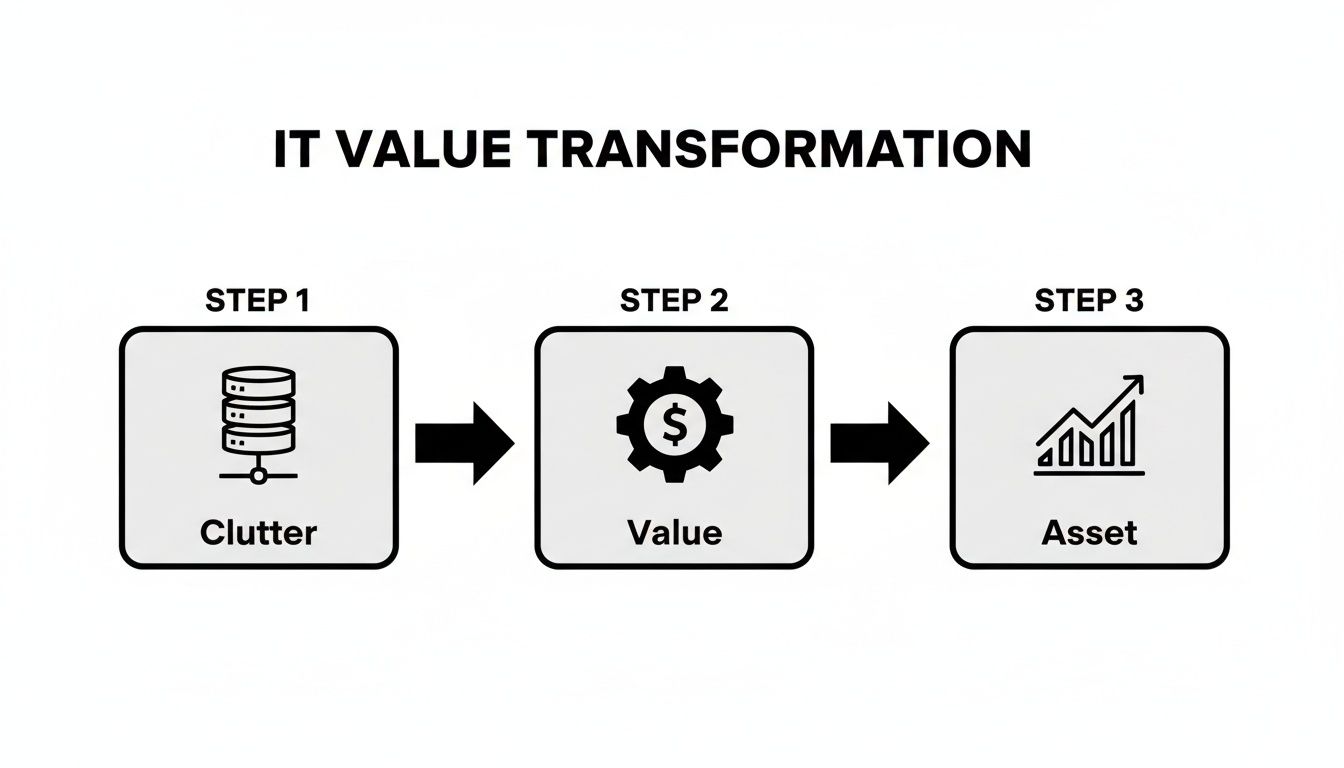
It really illustrates that with the right partner and process, what starts as an operational burden is methodically converted into tangible economic and sustainable value.
Meticulous Dismantling And Testing
Once data security is guaranteed, our trained technicians begin the careful process of dismantling each server, workstation, or laptop. This isn’t a brute-force teardown; it’s a systematic deconstruction performed by professionals who know the architecture of enterprise-grade hardware inside and out.
They expertly remove individual components, preserving their integrity. Each part is then sorted for the next phase—rigorous testing.
- RAM Modules: Every single stick of memory is individually tested for errors and performance consistency.
- CPUs (Processors): Processors are cleaned, inspected for any physical damage, and put through diagnostic stress tests to verify clock speeds and stability under load.
- Power Supply Units (PSUs): These are tested to make sure they deliver stable voltage and can handle their rated power output without any fluctuation.
- Storage Drives: Any drives that weren't designated for destruction are tested for health, speed, and sector integrity.
- Motherboards and Peripherals: All other components are thoroughly checked for functionality and compatibility.
This rigorous, multi-point testing protocol is what separates a truly enterprise-ready recycled part from simple "used" equipment. It’s a quality assurance process designed to guarantee reliability and performance, giving IT managers total confidence in every component.
Finally, each validated part is graded, categorized, and inventoried. This detailed classification system allows businesses to source the exact component they need, knowing it has been professionally vetted and certified for a second life. This meticulous journey is central to responsible IT equipment disposal.
You can learn more about how Reworx Recycling manages this entire lifecycle by exploring our equipment decommissioning services. Through this transformation, e-waste is not just diverted from landfills—it’s reborn as a reliable, cost-effective, and sustainable resource for your IT infrastructure.
Driving Business Growth With Recycled Components
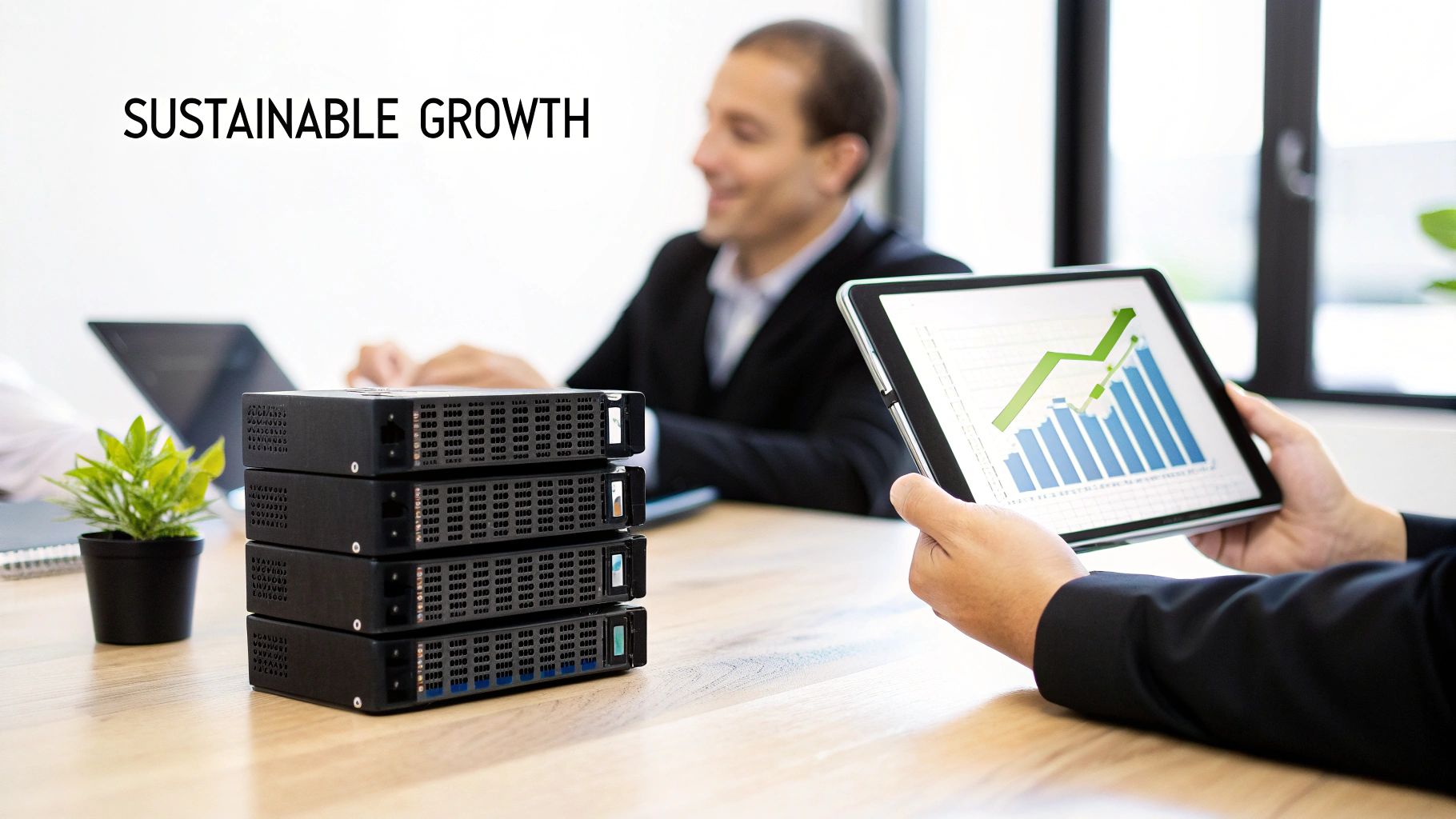
Let's move past the technical side of things for a moment. The real magic of using recycled computer parts is what they do for your business in the real world. This isn't just another IT strategy—it's a direct line to better financial health, stronger corporate responsibility, and more reliable operations. Once you start seeing retired hardware as a resource, you unlock some serious competitive advantages.
This shift in thinking is at the heart of what social enterprises like Reworx Recycling are all about. Every smart IT decision your Atlanta-based business makes, whether it's choosing a refurbished part or donating old gear, does more than help your bottom line. It directly funds community workforce development programs right here in Georgia, creating a powerful cycle of positive impact.
Strategic Cost Reduction
The first thing you'll notice is the dramatic impact on your IT budget. Buying new, original equipment manufacturer (OEM) parts for every single repair or upgrade gets expensive fast, especially for machines out of warranty or non-critical systems.
Recycled components are a fantastic alternative, often costing 50-70% less than their brand-new equivalents. This isn't about skimping on quality. It's about getting your hands on enterprise-grade hardware that has been professionally tested and certified.
Think about these common situations for an Atlanta business:
- Extending Equipment Lifespan: An out-of-warranty server needs a new power supply. An OEM replacement would cost a small fortune, but a tested, recycled unit does the same job for a fraction of the price, keeping that server in the game for years to come.
- Cost-Effective Upgrades: Your dev team needs more RAM for a testing environment. Instead of buying new sticks, you can source high-quality recycled memory modules to double their capacity without doubling the cost.
- Maintaining Legacy Systems: A critical piece of machinery runs on an older computer that's no longer made. Finding new parts is impossible, but a reliable vendor of recycled parts can supply exactly what you need to keep operations humming.
Achieving Sustainability Goals
In a world where environmental, social, and governance (ESG) metrics matter more than ever, using recycled parts is a clear and measurable win. Every component you reuse is one less that has to be manufactured—a process that burns massive amounts of energy, from mining raw materials to shipping them across the globe.
This directly shrinks your organization's carbon footprint and keeps hazardous e-waste out of landfills. It's no surprise the global refurbished computers and laptops market was valued at $5.7 billion in 2025 and is expected to hit $9.6 billion by 2034. This growth is driven by businesses like yours choosing sustainable options to avoid adding to the 60 million metric tons of e-waste generated each year. You can dive deeper into the numbers in this in-depth market analysis on refurbished computers.
By integrating recycled parts, your procurement strategy becomes a key pillar of your corporate sustainability report. It’s a tangible action that demonstrates a commitment to the circular economy.
This responsible approach is the foundation of a solid IT Asset Disposition (ITAD) plan. By exploring all your options for IT Asset Disposition with a certified partner, you can ensure your end-of-life hardware strategy aligns perfectly with your sustainability goals.
Building Supply Chain Resilience
If recent global events have taught us anything, it's that international supply chains are fragile. A shortage of a single microchip can halt production lines and sideline critical IT projects for months. Relying only on new components makes your business vulnerable to these shocks.
Creating a domestic supply channel through recycled parts provides a powerful buffer. A certified ITAD partner like Reworx Recycling gives you access to a steady inventory of components sourced from decommissioned corporate equipment right here in the U.S. This insulates your operations from:
- International shipping delays
- Geopolitical trade disputes
- Sudden manufacturing shortages
This resilience means you can handle repairs and upgrades on your own schedule, not someone else's. It transforms your IT infrastructure from a potential weak point into a source of stability, ensuring business continuity no matter what’s happening on the global stage.
Navigating Quality And Security With Confidence
For any IT manager in Atlanta, the two biggest questions that come to mind when considering recycled computer parts are always the same: are they reliable, and is my data safe? These are absolutely valid concerns, but they’re also completely solvable when you work with the right partner. A certified social enterprise like Reworx Recycling doesn’t just sell you used parts; we deliver components that have been through rigorous, standardized processes to guarantee they are both dependable and secure.
This assurance starts long before a part is ever listed for sale. The entire IT Asset Disposition (ITAD) process is built around eliminating risk. Data security isn't just a step in the process—it's the absolute first priority. From the moment a device with storage media leaves your facility, it's handled with a chain of custody and security protocols designed to protect your information.
Upholding The Gold Standard In Data Destruction
With certified recycled parts, lingering data is a non-issue because it’s completely eliminated at the source. Before a single screw is turned to harvest components, every data-bearing device is either sanitized or physically destroyed according to strict NIST 800-88 standards. This federal guideline is the undisputed benchmark for media sanitization.
This process guarantees total data destruction through one of two methods:
- Certified Wiping: We use specialized software to overwrite the entire drive with random data, making the original information forensically unrecoverable.
- Physical Destruction: For maximum security or on drives that are no longer functional, they are physically shredded into tiny, useless fragments.
This unwavering commitment means you receive a component that is completely clean, compliant, and free of any previous data. If you want to dive deeper into how this critical process works, you can find more details on our certified hard drive shredding and data destruction services.
Ensuring Component Reliability And Performance
Once data security is handled, our focus shifts entirely to quality assurance. The reliability you get from recycled parts isn't just luck; it's the result of a multi-stage validation protocol designed to weed out any component that doesn't meet our strict performance criteria.
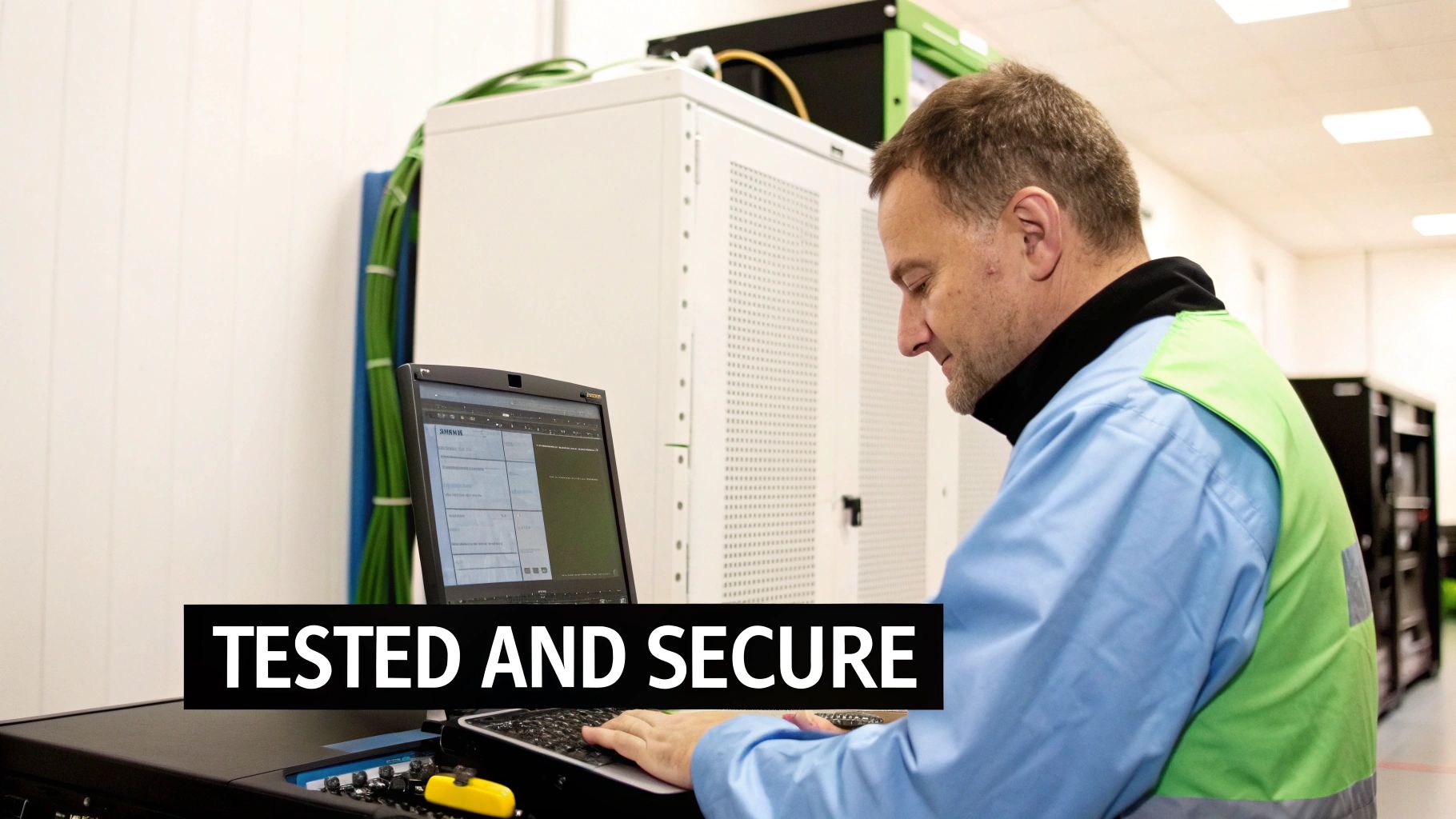
Technicians run diagnostic software to check for errors, inconsistencies, or signs of failure. After that, the parts are put through comprehensive stress tests that simulate demanding, real-world workloads. This ensures they can perform reliably under pressure, just like they would inside your own IT environment.
A recycled part from a reputable vendor isn't just "used"—it's "proven." It has already demonstrated its durability in an enterprise setting and has been professionally certified to continue performing, often backed by a solid warranty.
This meticulous approach is a key reason why more businesses are turning to recycled components to combat the growing e-waste crisis. The global mountain of e-waste hit a staggering 62 million tonnes in 2022, which is an 82% increase since 2010. Shockingly, only 22.3% of this was properly recycled, wasting an estimated $62 billion in recoverable materials and driving the U.S. electronics recycling industry toward a projected $27.7 billion by 2025. You can explore more data on this trend in a recent e-waste market analysis.
The Power Of Warranties And Vendor Support
Finally, the confidence you need comes from the vendor standing behind their products. A professional recycler like Reworx Recycling doesn't just sell you a part and walk away. Just like new components, our certified recycled parts come with warranties that guarantee their functionality. This gives you the same peace of mind you'd get from buying new, but with major cost and sustainability benefits.
And if an issue ever does arise, you have access to expert support to get it resolved quickly. This combination of rigorous testing, certified data destruction, and robust vendor support completely removes the perceived risks, making recycled computer parts a secure, reliable, and intelligent choice for any modern IT department.
Weaving Recycled Parts Into Your Procurement Strategy
Okay, so you see the value in recycled components. Now, how do you actually start using them? This is where the rubber meets the road—turning a smart idea into a practical procurement strategy that saves money and boosts your green credentials without adding risk.
The trick is to start small and smart. You don't need to overhaul everything overnight. Instead, think about targeting specific, low-risk areas where these parts can make a big impact. It's all about building a foundation of trust and proving the concept one successful project at a time.
Identifying The Best Use Cases
Let's be realistic: not every IT need is a perfect fit for a recycled part, and that’s okay. The goal here is strategic, not absolute. Your team should start by pinpointing areas where the benefits are obvious and the risks are practically nonexistent.
Here are a few perfect scenarios for an Atlanta-area business to get started:
- Repairing Out-of-Warranty Equipment: Got a server or workstation that’s past its warranty? Trying to get an original part from the manufacturer can be painfully expensive, if it's even available. A certified recycled power supply or stick of RAM can bring that machine back to life for a fraction of the cost.
- Upgrading Non-Critical Systems: Need to give a performance boost to the computers in a training room or a dev lab? Recycled CPUs or SSDs offer a massive performance jump without chewing up the budget you’ve reserved for mission-critical systems.
- Building Out Test Environments: You don’t need brand-new, top-shelf hardware to create sandboxes for software testing. Recycled parts are the perfect solution for building robust, cost-effective test environments that mirror your production setup.
- Maintaining Legacy Systems: For that one specialized piece of equipment that relies on older hardware, recycled parts aren't just a good option—they're often the only option to keep things running.
Your Vendor Vetting Checklist
Choosing the right partner is hands-down the most important step. A good vendor doesn't just sell parts; they sell peace of mind. To successfully bring recycled components into your infrastructure, it's essential to follow the best practices for vendor management to head off any potential risks and keep costs in check.
When you're talking to a potential supplier like Reworx Recycling, don't be shy. Ask the tough questions. Their answers will tell you everything you need to know about their commitment to quality and security.
- What certifications do you hold? You want to see standards like R2 (Responsible Recycling) or e-Stewards. These aren't just fancy acronyms; they guarantee ethical and environmentally sound practices.
- Can you walk me through your testing process? A quality vendor should be able to clearly explain their diagnostic, stress-testing, and grading procedures for every component.
- How do you handle data destruction? They need to confirm they follow NIST 800-88 standards and can provide certificates of data destruction for any assets they process. No exceptions.
- What kind of warranty and support do you offer? Make sure they stand behind their products with a solid warranty and have a real support system you can call on if needed.
Case Study: A Circular Strategy In Action
Think about a mid-sized marketing firm we recently worked with on a full office cleanout. They had 50 older desktops and a few servers collecting dust. Through our IT asset management program, we securely wiped all the data and sorted through the equipment to see what could be remarketed.
The value we recovered from their old gear went right back to them as a credit. They then turned around and used that credit to buy certified refurbished monitors and tested RAM from us to upgrade their employee training lab. It was a perfect circular IT strategy: their retired equipment funded an upgrade for another part of the business, all while ensuring everything was handled responsibly. This is a great example of our IT asset management services delivering real, tangible results.
Where Do You Go From Here?
The case for using recycled computer parts is stronger than ever. They are a smart, reliable, and profoundly sustainable resource for any modern business. This whole journey—from a retired piece of tech to an enterprise-ready component—proves that you don’t have to choose between saving money and getting high-quality gear. When you bring professionally tested and certified parts into your IT lifecycle, you start seeing immediate budget savings without ever having to compromise on performance or security.
This isn't just about the bottom line, though. Moving in this direction strengthens your supply chain, shrinks your environmental footprint, and gives you a powerful, measurable story for your corporate sustainability reports. Think about it: every single component you reuse is a direct investment in a more resilient and responsible way of doing business.
Finding a Partner for a Circular IT Economy
Of course, having the right partner is what makes this whole concept work smoothly in the real world. As a social enterprise, Reworx Recycling is in a unique spot to help you build a true circular IT economy. We don’t just process e-waste; we see it as an opportunity—for your business and for our community. Our entire mission is built around making sure your end-of-life electronics are handled with the highest standards of data security and environmental care, all while recovering as much value as possible.
This thinking applies to more than just hardware. The principles of getting the most out of your resources can even extend to your digital assets, with strategies for smarter content management and finding ways to integrate recycling content into your team's workflow.
The big takeaway here is simple: your retired IT equipment isn't just the end of the line. With the right partner, it becomes a valuable resource that can fuel your growth, protect the planet, and support community development.
Ready to build a smarter, more sustainable IT lifecycle for your Atlanta business? Whether you need to schedule an IT equipment pickup, inquire about our secure data destruction services, or explore a corporate donation partnership, Reworx Recycling is here to help. Contact us today to develop a strategy that benefits your budget, your community, and our shared environment.
Frequently Asked Questions
When it comes to recycled computer parts, IT managers and business owners understandably have a few questions. We get it. Let’s clear up some of the most common ones so you can move forward with confidence.
Are Recycled Computer Parts As Reliable As New Ones?
Yes, provided they come from a certified ITAD vendor like Reworx Recycling. It’s a huge myth that "recycled" automatically means lower quality. The reality is quite the opposite—these parts often originate from enterprise-grade equipment, which was built from the start to withstand much tougher conditions than your average new consumer product.
Before a single component is offered for sale, it has to pass a rigorous validation process. This isn't just a quick check-up. We're talking about:
- Comprehensive diagnostic testing to catch any potential faults.
- Performance stress tests that push the part to its limits, ensuring stability under real-world workloads.
- Professional grading based on its physical condition and functional performance.
Think about it: these components have already proven their mettle in demanding business environments. That track record often means you’re getting comparable—and sometimes even better—dependability for a fraction of what you’d pay for new.
How Can I Be Sure Recycled Parts Contain No Data?
This is a non-negotiable, and the answer is simple: data security is handled at the very beginning, long before a part is ever considered for reuse. A certified partner like Reworx Recycling follows strict data destruction protocols, including the federal NIST 800-88 standard.
All data-bearing devices are either forensically wiped using certified software—making data permanently unrecoverable—or physically shredded into tiny pieces. This guarantees every component you receive is a completely clean slate, totally free of prior data and fully compliant with all privacy regulations.
What Is The Real Environmental Impact Of Using Recycled Parts?
The environmental benefits are massive. Making a new computer component is an incredibly resource-heavy process. It requires mining rare earth metals, burning through huge amounts of energy, and producing significant carbon emissions.
When your organization chooses recycled computer parts, you’re directly supporting a more sustainable, circular economy. You're extending the life of materials that already exist, which dramatically cuts down the need to mine for new ones. It’s a simple decision that helps lower your company’s carbon footprint, saves energy, and keeps hazardous e-waste out of landfills, giving a real boost to your corporate sustainability goals.
How Does My Business Get Started With This Process?
Getting started is actually pretty straightforward. The easiest first step is to team up with a full-service social enterprise that can manage the entire IT asset lifecycle for you.
You can kick things off by scheduling an office cleanout or IT equipment pickup for your company's old electronics. During that initial chat with Reworx Recycling, you can outline your organization's specific IT Asset Disposition (ITAD) needs and ask about sourcing certified recycled components for your upcoming projects. This approach creates a closed-loop system where your old gear is handled responsibly, and you get access to a cost-effective, sustainable pipeline of parts for your future needs.
Ready to build a smarter, more sustainable IT strategy? The team at Reworx Recycling is here to help you navigate every step, from secure equipment disposal to sourcing reliable recycled parts. Explore our blog for more insights and best practices. https://www.reworxrecycling.org/category/recycling-blog