Planning a data center decommission in Sioux City isn't just about unplugging servers and calling it a day. It’s a crucial business project that, when done right, protects your company's data, recovers value from old hardware, and solidifies your commitment as a socially responsible local business. For IT managers and sustainability leaders, this process is a strategic IT asset disposition (ITAD) initiative that transforms risk into reward.
Think of it less as a cleanout and more as a strategic move. Getting it right protects you from security risks and can even put money back into your budget.
Why Plan Your Sioux City Data Center Decommissioning Now

As Sioux City businesses shift to the cloud, consolidate facilities, or upgrade to more powerful hardware, the same question always comes up: what do we do with all this old IT equipment? Leaving it in a storage room is a mistake many businesses make.
Those idle servers and storage racks aren’t just taking up space and sipping power. They're a security risk. If they still hold sensitive customer or company data, they become a liability waiting to happen. A well-executed decommissioning plan flips that script, turning risk into a value-generating opportunity through strategic ITAD.
The Impact of Local Growth and Tech Cycles
Sioux City is right in the middle of Iowa's ongoing tech growth. We saw a clear sign of this when the city council approved $800,000 in public funds to help transform the historic Badgerow Building into a modern data center.
While investments like this are fantastic for the region, they also highlight an unavoidable reality: today's cutting-edge facility is tomorrow's legacy hardware. That technology lifecycle means a secure, sustainable end-of-life plan for your IT assets is more important than ever.
Instead of a last-minute, expensive emergency, proactive data center decommissioning turns this into a planned, value-generating project.
By treating decommissioning as a strategic project, Sioux City businesses can transform a logistical challenge into a financial and social victory. It's about turning retired assets into resources, whether through remarketing revenue or community-focused corporate donation programs.
Key Drivers for Decommissioning in Sioux City
Several factors are pushing Sioux City businesses to get serious about their decommissioning plans. These aren't just IT headaches; they touch on finance, legal compliance, and corporate sustainability. Understanding what’s motivating the change helps get everyone, from the server room to the C-suite, on the same page.
Many local companies are decommissioning their data centers for a mix of business, technology, and financial reasons. This table breaks down the most common motivators we see.
Table: Key Drivers for Data Center Decommissioning in Sioux City
| Driver Category | Specific Motivator | Impact on Sioux City Businesses |
|---|---|---|
| Technology & Operations | Hardware Refresh Cycles | Moving to more powerful, energy-efficient servers to handle modern workloads and AI. |
| Business Strategy | Cloud Migration & Consolidation | Shifting to cloud services or colocation facilities, making on-premise centers redundant. |
| Risk & Compliance | Data Security & Privacy Laws | Ensuring 100% secure data destruction to comply with regulations and prevent costly breaches. |
| Financial | Value Recovery (ITAD) | Selling remarketable assets to offset project costs and improve the bottom line. |
| Corporate Responsibility | Sustainable Recycling & Community Goals | Donating functional equipment and responsibly recycling e-waste to support local nonprofits and the environment. |
These drivers show that a well-planned decommissioning project delivers benefits across the entire organization, from mitigating risk to enhancing your brand's reputation in the Sioux City community.
Partnering with a social enterprise like Reworx Recycling helps your Sioux City business tackle all these points at once. We offer secure IT asset disposition (ITAD) that guarantees data destruction, maximizes your financial return, and keeps you compliant. Better yet, our donation-based recycling model gives your usable equipment a second life, supporting local schools and nonprofits right here in our community. For a closer look at the process, you can download our free server decommissioning checklist.
Crafting Your Decommissioning Blueprint
Thinking about a data center decommission in Sioux City? A truly successful project doesn’t begin with unplugging hardware; it starts with a solid, strategic blueprint that maps out every asset, risk, and stakeholder involved. This is the foundation for secure and efficient IT equipment disposal.
Your first move should be to pull together a cross-functional team. This isn't just an IT task—it's a full-blown business operation. You'll need key people from different departments to make sure nothing gets missed.
- IT Operations: These are your boots on the ground. They know the infrastructure inside and out.
- Facilities Management: They handle the power, cooling, and physical site. You can't do anything without them.
- Finance Department: They’ll be tracking the budget, asset depreciation, and any value you recover from old gear.
- Legal & Compliance: Absolutely essential for navigating data privacy laws and sticky contractual obligations.
- Security Team: Their job is to keep both the physical site and your digital assets secure from start to finish.
Getting this group together from day one is crucial. Their early input helps define the project's scope, budget, and timeline, preventing major headaches and ensuring everyone is on board.
Define Your Project Scope and Goals
With your team assembled, it's time to get crystal clear on what "done" actually means for your Sioux City facility. Are you moving everything to the cloud? Consolidating multiple sites into one? Or is this just a hardware refresh for a few racks? Your answer will shape the entire project's complexity and scale.
From there, you need to set clear, measurable objectives. Vague goals lead to vague results. Get specific.
For example, your goals might look like this:
- Achieve 100% data sanitization on every single data-bearing device.
- Recover at least 20% of the project's cost through remarketing usable assets.
- Complete the physical site teardown within a 30-day window.
These defined goals act as your project's north star, keeping the entire team aligned and focused on what truly matters.
The biggest mistake we see is businesses treating a decommission like a simple disposal job. It's a complex IT asset disposition project that demands a strategic plan to protect data, recover value, and stay compliant.
The Cornerstone: An Accurate Asset Inventory
If there’s one document that can make or break your decommission, it’s the asset inventory. This is the foundation for everything else—data destruction, logistics, and financial reconciliation. This isn't just a quick headcount; it's a detailed census of every single piece of equipment in the data center, from servers to networking gear.
For every server, switch, storage array, and even the PDUs, you need to document the critical details. It’s meticulous work, but it prevents hugely expensive mistakes down the line.
Essential Inventory Data Points
| Data Category | Specific Information to Capture | Why It Matters |
|---|---|---|
| Identification | Asset Tag, Serial Number, Make, Model | Uniquely identifies each item for a bulletproof chain-of-custody. |
| Location | Rack, U-position, Room Number | Guides the physical de-installation and ensures no asset gets left behind. |
| Configuration | CPU, RAM, HDD/SSD Details | This is what determines an asset's potential resale value or recycling path. |
| Data Status | Contains Sensitive Data (Yes/No) | Immediately flags the item for secure data destruction and dictates the right sanitization method. |
A precise inventory tells you what can be resold, what must be securely destroyed, and what’s destined for sustainable recycling. This breakdown is the core of a smart IT Asset Disposition (ITAD) strategy. To get a deeper understanding, check out our guide on what is IT asset disposition and learn how to turn retired gear into a strategic plus.
A partner like Reworx Recycling can be a game-changer at this stage. Our team has the experience to help your Sioux City business perform a thorough inventory, spot hidden value, and build a decommissioning plan that’s both secure and efficient. This initial collaboration ensures your blueprint is built on a solid foundation right from the start.
Executing Secure Data Destruction and Asset Removal
This is where the rubber meets the road. All your planning and inventory work leads to this moment: the physical teardown of your Sioux City data center. It's a hands-on phase that boils down to two critical jobs happening at once—permanently destroying all your data and safely getting every piece of hardware out the door.
The second a server is unplugged, the data on it becomes a liability. That’s why secure data destruction isn’t just another task on a checklist; it's your single most important responsibility during this project. One missed drive or a sloppy wiping process can lead to a data breach that completely undermines all your careful planning.
A solid decommissioning project always follows a logical flow, starting with the foundational planning long before anyone picks up a screwdriver.
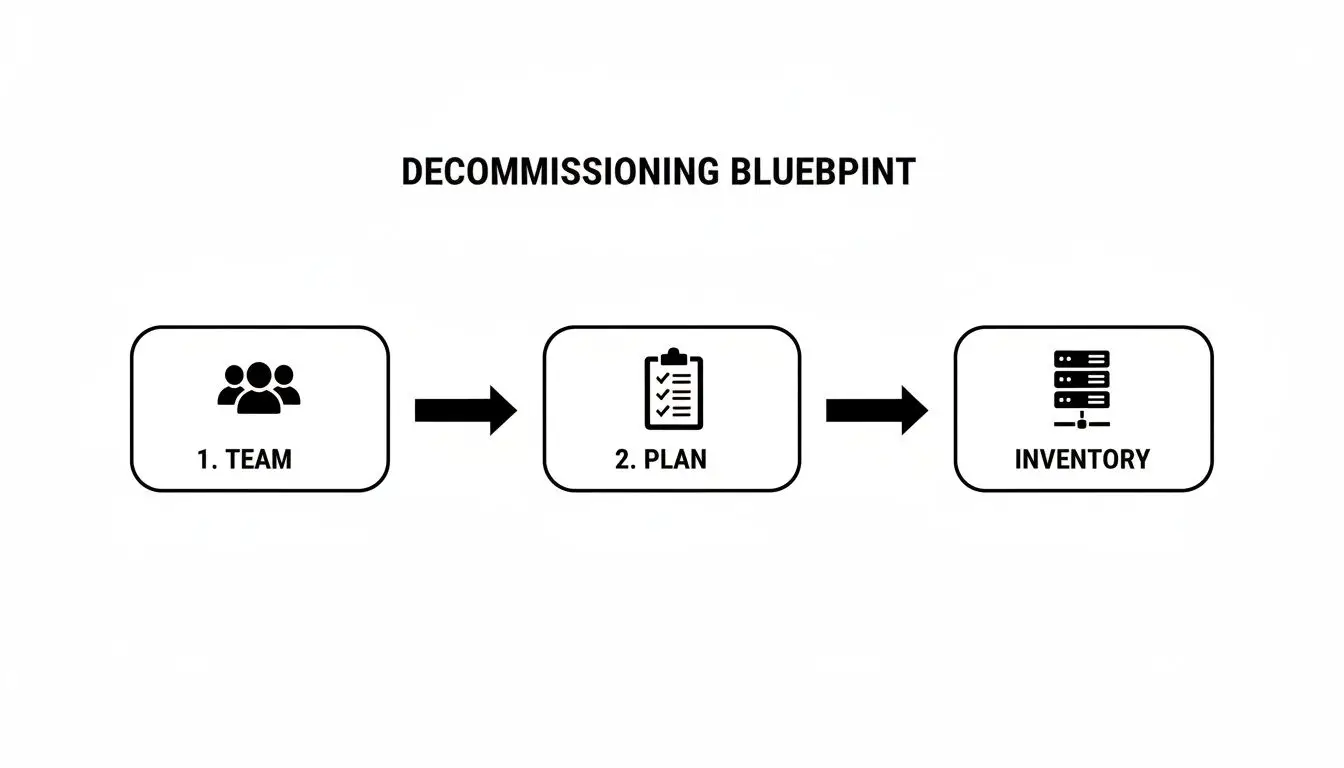
As you can see, a successful project is built on these sequential steps. You have to get your team, plan, and inventory squared away before the physical work even starts.
Sanitization Methods and Standards
Not all data destruction is the same. The method you choose has to line up with your security policies, industry regulations, and what you plan to do with the asset afterward. The gold standard here is the NIST 800-88 Guidelines for Media Sanitization, which breaks it down into three main approaches.
- Clear (Software Wiping): This is where you use specialized software to overwrite the data on a drive. It’s a good fit for lower-risk information and keeps the drive usable, which helps with asset recovery value.
- Purge (Degaussing): This method uses a powerful machine to create a strong magnetic field that scrambles the data on magnetic media like hard disk drives (HDDs) and tapes. The drive is rendered unusable.
- Destroy (Physical Destruction): The most secure option. This means physically shredding, crushing, or incinerating the media. For solid-state drives (SSDs), which can’t be reliably degaussed, physical destruction like shredding is the only guaranteed method.
For any Sioux City business handling sensitive customer or financial data, physical destruction is almost always the right call. There's simply no chance of data recovery.
A Certificate of Data Destruction (CoD) is your golden ticket for compliance. This is a non-negotiable document from your ITAD partner that lists every single serialized asset and confirms it has been destroyed. It’s the auditable paper trail that proves you did your due diligence.
Choosing the right destruction method is a critical decision. Here’s a quick comparison to help you weigh your options based on security, compliance, and asset value.
Data Destruction Methods Comparison
| Method | Security Level | Asset Reusability | Best For |
|---|---|---|---|
| Clear (Wiping) | Medium | High | Re-selling or re-using assets with non-sensitive data. |
| Purge (Degaussing) | High | None | Retiring magnetic media (HDDs, tapes) with sensitive data. |
| Destroy (Shredding) | Highest | None | End-of-life media, SSDs, and meeting strict compliance. |
Ultimately, the choice depends on your organization's risk tolerance. When in doubt, physical destruction offers the most peace of mind and the strongest legal defense.
Logistics of Site Teardown and Asset Removal
Beyond wiping data, the physical work of a data center decommissioning in Sioux City Iowa is a heavy lift—literally. This isn't like an office cleanout. You're dealing with heavy, delicate, and often awkward equipment.
A professional crew will methodically de-rack servers, power distribution units (PDUs), and networking gear. They’ll also tackle the infamous "spaghetti" of thousands of feet of cabling, which has to be pulled out without damaging the building's infrastructure—especially crucial if you're in a leased facility.
Throughout this process, a strict chain of custody is essential. Every single asset must be tracked from the moment it's unbolted from the rack until it arrives at a secure facility for processing. Serialized reporting ensures the hard drive you tagged in rack 14, U-position 5, is the exact one listed on your final Certificate of Data Destruction. This unbroken chain is your shield against loss or theft. It's a key area where a professional partner like Reworx Recycling provides immense value through on-site services, secure trucks, and transparent documentation. You can see how we guarantee that security by exploring our secure data destruction services.
The demand for these professional ITAD services is skyrocketing. The global market is projected to grow by USD 19.94 billion by 2032, largely because companies are finally moving off legacy hardware. This trend is a wake-up call, especially when you consider that an estimated 60% of data centers admit to having outdated equipment that could still hold sensitive data. These insights from 360iResearch show just how critical it is to get this process right.
Maximizing Value And Environmental Compliance
So, your data is wiped and the hardware is finally off-site. But the project isn't finished just yet. This final leg of your data center decommissioning in Sioux City Iowa is where you transform that mountain of retired equipment from a logistical headache into a positive entry on your balance sheet and a win for the community. It’s all about shifting your mindset from simple disposal to strategic asset recovery.
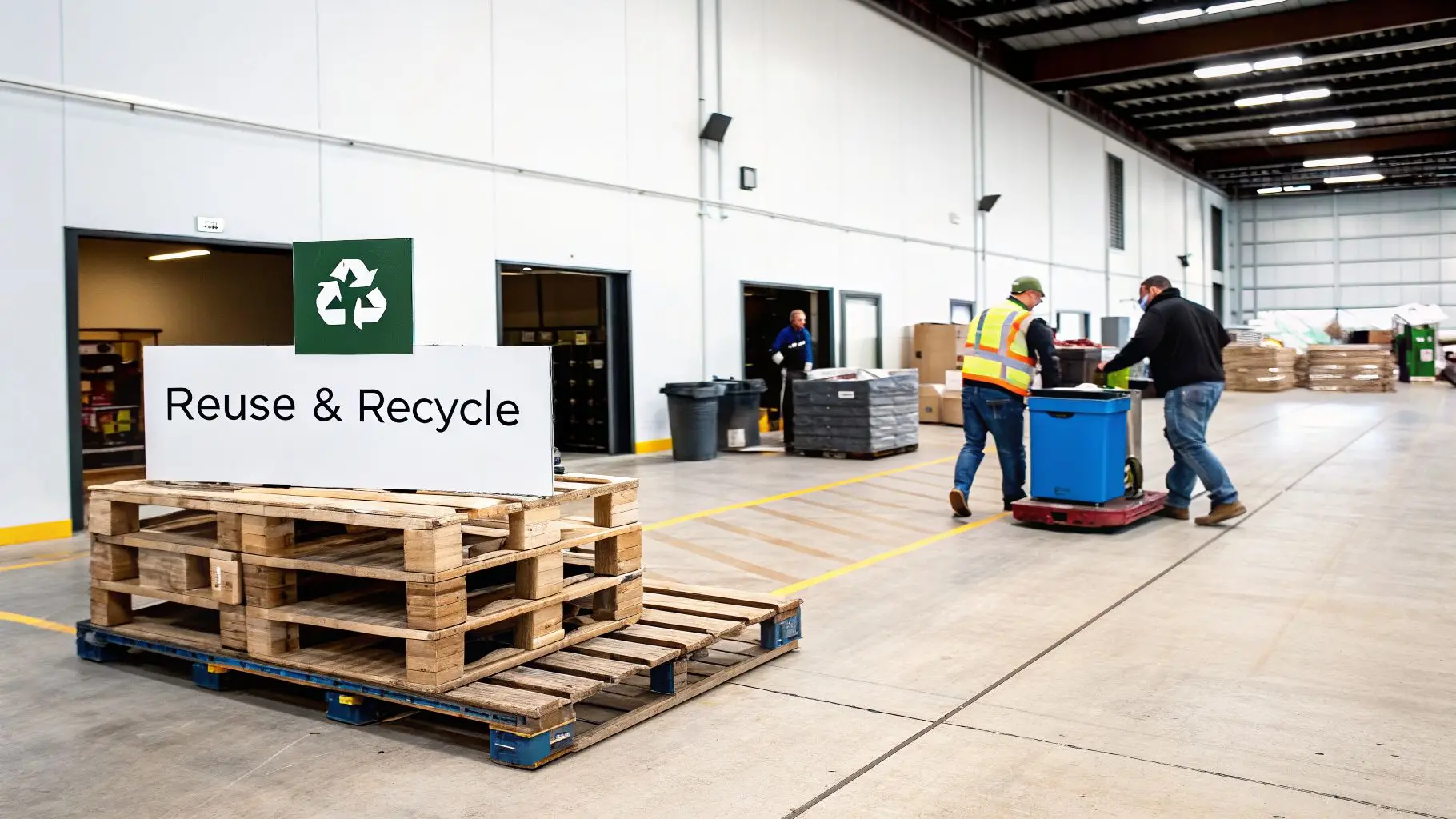
The first thing you need to do is find a certified ITAD provider. This isn't just a best practice; it's your shield against serious environmental and financial blowback. When electronics are handled improperly, they become hazardous e-waste. Federal regulations like the EPA's e-waste guidelines are clear: the original owner is responsible for where that equipment ultimately ends up.
Turning Old Hardware Into New Value
Believe it or not, a lot of that retired equipment isn't just scrap. There’s a surprising amount of value left, and a professional ITAD partner taps into it through two key channels: remarketing and materials recycling. They know exactly how to sort your assets to get the most out of each one.
- Remarketing: Newer servers, networking gear, and storage arrays often have plenty of life left in them. We can securely wipe and refurbish these items to sell on the secondary market. That revenue goes directly toward offsetting your decommissioning costs.
- Recycling: For older or broken equipment, the value is in the raw materials. Responsible, sustainable recycling breaks everything down to its core components—like gold, copper, and aluminum—keeping them out of landfills and putting them back into the supply chain.
This two-pronged approach makes sure every single asset contributes to a better financial outcome. You can see a more detailed breakdown of this process and learn about maximizing value through IT asset disposition to understand how we turn retired gear into real returns.
Navigating Environmental Regulations In Iowa
Staying compliant with environmental rules is not optional. While Iowa doesn't have a statewide ban on sending electronics to landfills, many local facilities—including those around Sioux City—flat-out refuse to accept e-waste. That puts the responsibility for proper disposal right back on your shoulders.
A key consideration for public sector organizations is that these services prevent landfill contributions. This is vital since e-waste constitutes 70% of toxic landfill waste. By partnering with Reworx Recycling for decommissioning, Sioux City-area operations can future-proof their transitions, blending security, sustainability, and ROI in a market where 80% of enterprises now prioritize green ITAD. You can explore more on Iowa's data center trends and the legislative push for transparency in this in-depth local report from Axios.
Working with a certified recycler like Reworx Recycling, which operates on a strict zero-landfill policy, is your guarantee of compliance. We provide a clear paper trail proving your e-waste was handled correctly according to EPA guidelines and all local rules. It's also worth noting that specialized policies like environmental insurance can offer an extra layer of protection, covering potential liabilities tied to the disposal process.
The Reworx Recycling Difference: A Social Enterprise Model
Here’s where working with Reworx Recycling brings something extra to the table, something that goes way beyond just dollars and cents. As a donation-based social enterprise, we actively look for functional equipment—like laptops, desktops, and monitors—that can be refurbished and given a second life.
This unique approach turns your decommissioned assets into a direct benefit for the community. Instead of just being shredded for materials, your old hardware can end up supporting local schools, non-profits, and job training programs right here in Iowa. Suddenly, a standard end-of-life project becomes a powerful corporate social responsibility (CSR) story that your employees, customers, and the entire Sioux City community can get behind. It’s about creating a positive impact that lasts long after the last server rack is gone.
Choosing the Right Decommissioning Partner in Iowa
Picking an IT Asset Disposition (ITAD) partner for your data center decommissioning in Sioux City Iowa is a decision that will echo through your entire project. The right team becomes an extension of your own, shielding you from data breaches, keeping you compliant, and getting the most money back from your retired hardware.
But the wrong choice? That can quickly spiral into a mess of legal risks, financial losses, and a damaged reputation. This isn't just about hauling away old servers; it's about protecting your business.
Decommissioning in Iowa comes with its own unique flavor of rules and expectations. As the state’s tech footprint expands, so does the focus on how companies handle their end-of-life equipment. That means vetting your ITAD partner isn’t just a smart move—it’s a critical part of doing business here.
Navigating Iowa’s Regulatory Landscape
While Iowa doesn't have a statewide landfill ban on e-waste, many local ordinances in and around Sioux City do. This puts the responsibility for proper disposal right back on you, the owner of the equipment. On top of that, new state-level rules are demanding more transparency from data-heavy businesses.
A key example is Iowa's HF 2447, set to require quarterly resource reports by 2026. This law forces public disclosure on water usage—a big deal when data centers can guzzle 360,000 gallons daily—and protects residents from footing the bill for grid upgrades. You can dig into the specifics in a report from the Business Record.
A partner’s approach to sustainability is no longer a "nice-to-have." It’s a core competency that reflects their understanding of Iowa’s evolving regulatory and social expectations.
Your Essential ITAD Vendor Checklist
To make sure you end up with a partner you can trust, you need a solid vetting process. This checklist covers the absolute must-haves for any ITAD vendor you’re considering for a project in the Sioux City area.
Certifications are Non-Negotiable: Insist on top-tier industry certifications like R2 (Responsible Recycling) or e-Stewards. These aren't just fancy logos on a website; they are proof that the vendor meets the highest standards for data security, environmental safety, and worker protection, all verified by tough third-party audits.
Rock-Solid Data Security Protocols: Ask them to walk you through their data destruction process, step by step. Do they follow NIST 800-88 guidelines? Can they perform on-site shredding for ultimate peace of mind? A real pro will offer a clear, auditable chain of custody from your facility to the final disposition and back it up with serialized Certificates of Data Destruction (CoDs).
Logistical Capability and Experience: A data center teardown is a heavy-duty job. Your partner needs an experienced crew, the right tools, and secure transport to handle everything from de-racking massive servers to wrangling miles of cable and getting it all off-site safely.
Transparent Reporting and Value Recovery: How will you know what happened to every single asset? A reliable vendor provides detailed, serialized reports that you can match against your original inventory. They should also have a fair and transparent system for evaluating remarketable equipment and sharing that revenue back with you.
Why Reworx Recycling Is The Right Choice for Sioux City
Reworx Recycling doesn't just check all these boxes; our unique social enterprise model takes the entire process to another level. We bring R2v3 certified services to the table, guaranteeing your data center decommissioning in Sioux City Iowa is managed with the highest level of security and environmental care.
But we go beyond just compliance. Our focus on donation adds another layer of value. We actively look for functional equipment that can be refurbished and given to local Iowa communities to support digital inclusion. This turns your decommissioning project from a logistical necessity into a powerful story of corporate social responsibility.
When you partner with Reworx, you’re choosing a provider that understands the needs of businesses that are both security-focused and socially conscious. Explore our comprehensive Iowa ITAD services to see how we can help you make a real impact.
Tackling Your Decommissioning Questions
Even with the best-laid plans, a project as complex as a data center decommission will have its share of questions. For many IT managers and business leaders in Sioux City, this might be their first time tackling an undertaking of this scale. We get it.
To help clear things up, we've put together answers to the questions we hear most often from local organizations just like yours.
How Long Does a Decommissioning Project Take?
This is always one of the first questions, and the honest answer is: it really depends on the size of your operation. Cleaning out a small server closet in a downtown Sioux City office could be done in just a few days. On the other hand, a full-scale enterprise data center shutdown is a project that can span several months.
A few key things will shape your project's timeline:
- Asset Volume: The sheer number of servers, storage arrays, and network switches is the biggest factor.
- Data Destruction Needs: On-site physical destruction, for instance, can add more time compared to off-site processing.
- Logistical Complexity: Little things like building access, elevator availability, and your site’s location all play a role.
Most projects break down into phases. You can generally expect 1-4 weeks for planning and a detailed inventory, 1-3 weeks for the hands-on de-installation and removal, and another 1-2 weeks for secure transport and final processing. Bringing in an experienced partner like Reworx Recycling early on is the surest way to get an accurate timeline built for your specific needs.
Can We Recover Financial Value from Old Equipment?
Absolutely. Recovering value isn't just a possibility; it should be a central goal of any smart IT asset disposition (ITAD) strategy. Your retired hardware is far from worthless. In many cases, it can create a significant revenue stream to help offset the project's costs.
Value comes from two main avenues. First, newer servers, networking gear, and high-capacity storage often have a strong resale value on the secondary market. A professional ITAD partner will test, refurbish, and find the right buyers for these assets on your behalf.
Second, even for equipment that's obsolete or broken, there’s still value in the raw materials. Responsible recycling can extract valuable commodities like copper, aluminum, and gold. This ensures every single asset contributes back to your bottom line, maximizing your financial return and making sure nothing goes to waste.
What Is a Certificate of Data Destruction?
A Certificate of Data Destruction (CoD) is an essential legal document. Think of it as your official, auditable receipt proving that all data on your old devices has been permanently and irreversibly destroyed. For any Sioux City business handling sensitive information under regulations like HIPAA or GLBA, this document is non-negotiable.
A CoD is your ultimate defense against claims of a data breach. It legally transfers liability for the data from your organization to your certified ITAD partner, providing documented evidence that you followed due diligence.
The certificate needs to be detailed, listing key information for every single data-bearing device:
- Unique serial numbers for each hard drive or SSD.
- The exact destruction method used (e.g., shredding, degaussing).
- The date and location where the destruction took place.
- A formal statement of compliance from your vendor.
Receiving a comprehensive CoD from a trusted partner like Reworx Recycling gives you the legal peace of mind you need to close out the project with total confidence.
Why Choose a Donation-Based Recycler?
Working with a donation-based social enterprise like Reworx Recycling for your data center decommissioning in Sioux City Iowa offers benefits that go far beyond standard ITAD. You still get the same top-tier data security and certified environmental compliance you’d expect, but our model adds a powerful social return on your retired assets.
This turns a routine end-of-life project into a powerful story of corporate social responsibility (CSR). Instead of being shredded, functional equipment is refurbished and given a second chance. We direct these donated computers, laptops, and monitors to support local schools, non-profits, and job training programs across Iowa, helping to bridge the digital divide.
This community focus is particularly important when you consider local environmental health. For example, recent air quality data for Sioux City has shown some worrying trends, including a 15% jump in PM2.5 levels, with peaks hitting 39.3 µg/m³. Improper e-waste disposal is a known contributor to this kind of pollution, as the EPA has identified a link between these pollutants and areas with higher asthma rates. Discover more insights about this data from Business Record.
By choosing a recycler committed to responsible practices, you’re actively helping protect Sioux City's environment while also empowering its residents. It's a dual benefit that strengthens your company's reputation and creates a positive legacy that resonates with customers, employees, and the entire community.
Are you ready to turn your data center decommissioning into a secure, profitable, and socially responsible project? Partner with Reworx Recycling to ensure your retired IT assets are handled with expert care while making a positive impact on the community. Schedule a pickup, learn more about our corporate donation programs, or explore our services and see how we can help your Sioux City business by visiting our Recycling Blog.