For corporate sustainability leaders, IT managers, and business owners in the five boroughs, mastering New York City recycling regulations is a critical part of operational compliance. Navigating the city's complex rules is essential to avoid significant fines and operational disruptions. This guide provides a clear roadmap for managing commercial waste streams, with a focus on one of the most challenging areas for modern businesses: secure and responsible IT equipment disposal.
Navigating NYC's Commercial Recycling Landscape
New York City's economy, a global hub for finance, technology, and healthcare, generates a vast and complex stream of commercial waste. In response, the NYC Department of Sanitation (DSNY) enforces strict rules that every business must follow. Understanding these obligations is the first step toward building a compliant and sustainable operation. This guide will break down the essentials, from universal recycling mandates to the specific requirements for electronics and IT hardware.
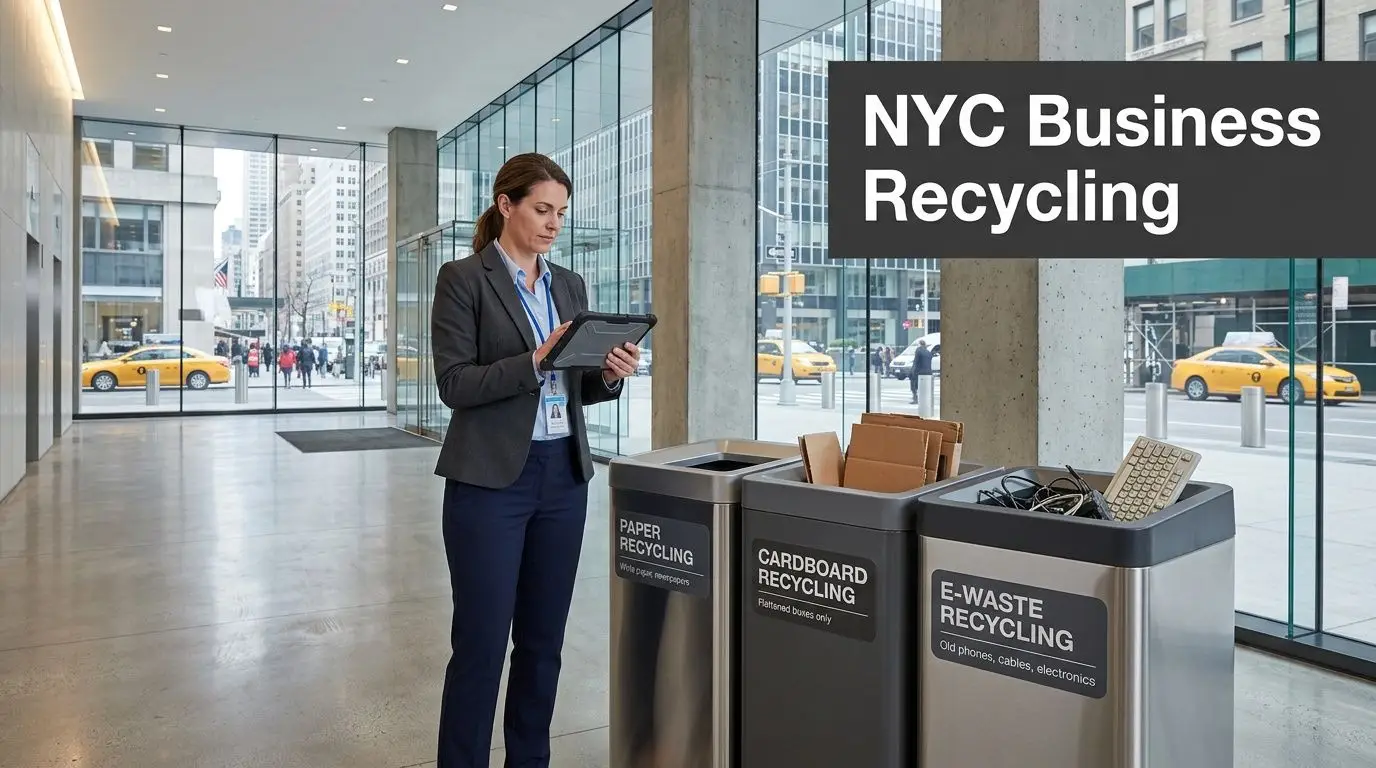
The Foundation of Business Recycling in NYC
At its core, the city’s commercial recycling program is straightforward: businesses must separate designated materials from their trash for collection by a licensed private carter. This is a legal mandate, designed to divert valuable resources from landfills, reduce environmental impact, and foster a more circular economy.
To clarify these responsibilities, here is a quick overview of what your business needs to manage.
NYC Business Recycling at a Glance
| Material Type | Includes | Who Must Recycle This? |
|---|---|---|
| Paper & Cardboard | Office paper, mail, corrugated boxes, newspapers, magazines, paper bags | All businesses in NYC must recycle these items. |
| Metal, Glass & Plastic | Metal cans, glass bottles & jars, rigid plastic containers, aluminum foil | All businesses must separate these recyclables from their trash. |
| Construction & Demolition Debris | Wood, concrete, brick, sheetrock, metal from renovations or building projects | Businesses generating this waste must use a carter licensed to handle it. |
| Electronic Waste (E-waste) | Computers, monitors, printers, phones, and other IT equipment | All businesses are legally required to recycle electronics and are prohibited from disposing of them in the trash. |
This table outlines the basic requirements. However, compliance also involves proper signage and contracting with the right licensed haulers.
Non-compliance can be costly. The DSNY can issue fines for commingled materials, improper signage, or using an unlicensed waste hauler. These penalties can accumulate quickly, turning a seemingly minor oversight into a significant financial liability.
Beyond the Basics: Specialized Waste Streams
While all businesses must recycle paper and containers, certain industries face additional mandates. For example, restaurants and food service businesses are often required to separate organic waste for composting. Similarly, businesses generating significant textile waste must follow specific recycling protocols.
This tiered system highlights that a one-size-fits-all recycling plan is ineffective in NYC. A law firm in Midtown has different obligations than a restaurant in Brooklyn or a manufacturing facility in Queens. This is precisely where a strategic partner can provide immense value.
For one of the most challenging aspects of New York City recycling—IT asset disposition—partnering with a social enterprise like Reworx Recycling simplifies compliance. We assist organizations in adhering to e-waste laws, provide certified data destruction, and connect their disposal activities to a mission that benefits both the environment and the community. By working with us, you can transform a compliance requirement into a powerful narrative of corporate social responsibility and position your business as a leader in sustainable operations.
A Deeper Dive into NYC’s Commercial Recycling Regulations
Understanding New York City’s commercial recycling rules can be as complex as navigating the subway system for the first time. Each regulation has its own path, and knowing the map is essential to avoid costly delays—or in this case, fines. For any business in the five boroughs, the NYC Department of Sanitation (DSNY) has clear mandates that are non-negotiable. Adherence is crucial to protect your bottom line.
The entire system is predicated on a single principle: every business must separate designated recyclable materials from their refuse. This is a legal requirement underpinning the city's comprehensive waste reduction strategy. The goal is to divert valuable materials from overburdened landfills, a non-negotiable for a metropolis of this scale.
The Universal Recycling Rules for Every NYC Business
At a minimum, every business in NYC, regardless of size or industry, must implement a system to recycle a core group of materials. This is a fundamental cost of doing business in the city.
These universal requirements mandate the separation of:
- Paper and Cardboard: This encompasses everything from office paper and mail to corrugated boxes and newspapers.
- Metal, Glass, and Plastic: This category includes items like metal cans, glass bottles and jars, and all types of rigid plastic containers.
These materials cannot be mixed with regular trash. Once sorted, they must be collected by a private carter licensed by the NYC Business Integrity Commission. Selecting the right carter is as critical as sorting your waste correctly, as they become a key partner in your compliance strategy.
Why Clear Systems and Employee Training Matter
Simply placing a few extra bins is insufficient. DSNY regulations require your recycling program to be clear enough for every employee to understand and execute correctly. Imagine an office where one person diligently sorts paper, but a colleague discards a plastic bottle in the trash. This single error breaks the compliance chain and could easily result in a violation during an inspection.
Proper execution is paramount to avoiding fines. This entails using clear, DSNY-compliant labels on all bins, conducting regular staff training to ensure everyone knows the procedures, and placing recycling stations in convenient, high-traffic areas. Consistency helps transform recycling from a daily chore into an ingrained habit.
Industry-Specific Recycling Rules to Know
Beyond these universal mandates, certain industries must comply with additional, more specialized recycling regulations. These rules target waste streams unique to specific business types, making New York City recycling a highly specific compliance puzzle.
For instance:
- Food Service and Hospitality: Restaurants, hotels, and caterers meeting specific size thresholds are typically required to separate organic waste, such as food scraps, for composting.
- Textile-Intensive Businesses: Apparel companies or large retailers may need to adhere to specific rules for recycling fabric scraps and other textile waste.
These targeted regulations demonstrate why a one-size-fits-all plan is ineffective. A financial services firm in FiDi has vastly different waste obligations than a restaurant in Williamsburg. The only way to ensure full compliance is to understand precisely what is expected of your business. This complexity is particularly pronounced when dealing with one of the most critical waste streams for any modern enterprise: electronics. Just as restaurants must manage organics, every business today needs a robust plan for responsible IT equipment disposal—a challenge that demands specialized expertise.
The Critical Role of E-Waste Recycling in NYC
While recycling paper and plastic is common knowledge, New York City businesses face a far more hazardous and strictly regulated category: electronic waste, or e-waste. Proper management of outdated technology is not merely an environmental consideration; it is a critical component of risk management and legal compliance. Industries from finance to healthcare are constantly upgrading their technology, creating a steady stream of obsolete computers, servers, and devices that require proper disposal.
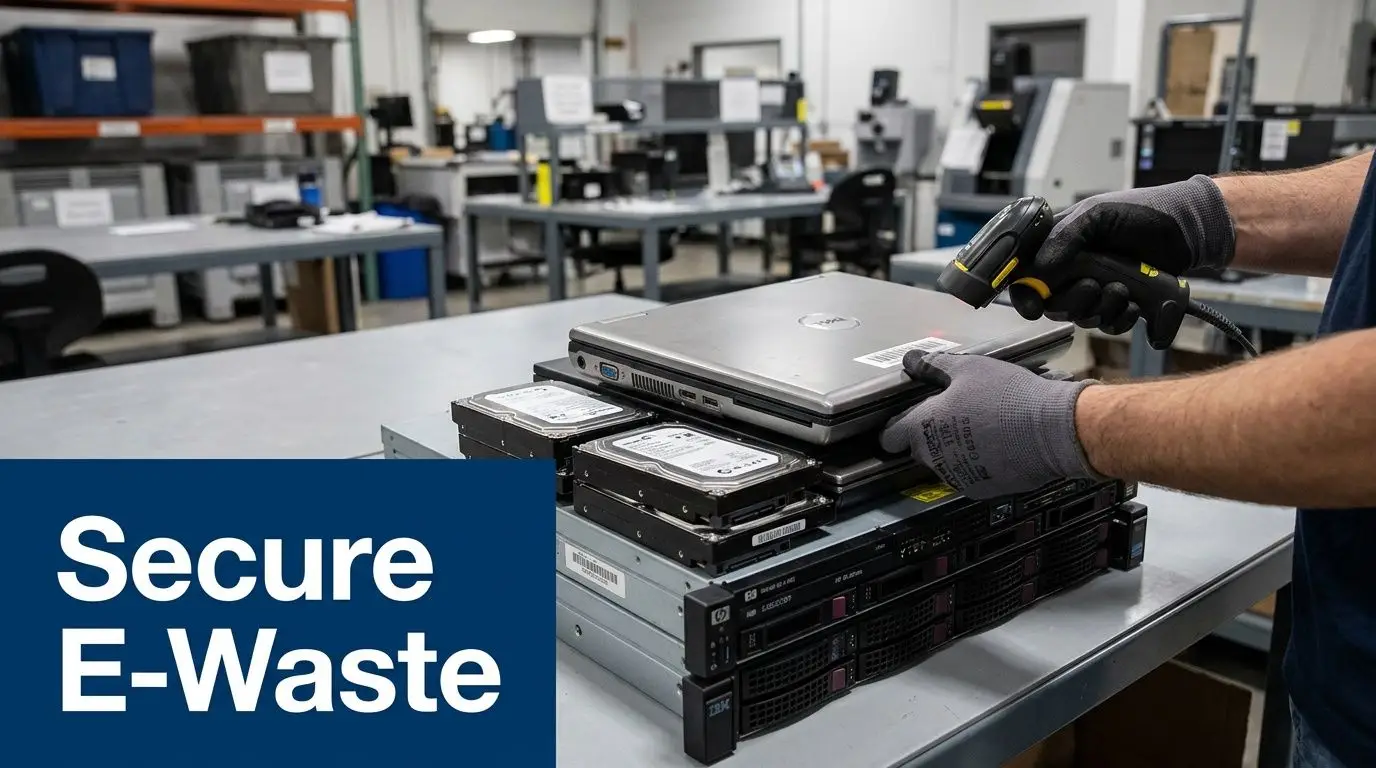
This constant turnover prompted the NYS Electronic Equipment Recycling and Reuse Act. This state law makes it illegal for any business or individual to discard electronics in the trash. It is designed to prevent the toxic materials within—such as lead, mercury, and cadmium from circuit boards and screens—from contaminating our landfills and water supply.
E-Waste Regulations for NYC Businesses
For sustainability and IT leaders in the city, understanding this law is the first step. The state mandates that all organizations must ensure their e-waste is recycled through a certified process. This is more involved than simply dropping off a few old monitors at a weekend collection event.
The law is comprehensive, covering a wide range of devices typically found in an office:
- Computers & Laptops: Desktops, laptops, and all peripherals like keyboards and mice.
- Servers & Networking Gear: The backbone of your IT infrastructure, including servers, switches, and routers.
- Monitors & Televisions: All screen types, from older CRTs to modern LCD and plasma displays.
- Small Electronics: Everyday items such as tablets, mobile phones, and printers.
Failure to comply can lead to substantial fines and legal repercussions. Therefore, a formal e-waste management plan is an absolute necessity for New York City recycling compliance.
Residential Options vs. Business Solutions
It is crucial for businesses to distinguish between residential e-waste programs and solutions designed for corporate needs. While NYC provides residents with convenient options like curbside pickup or drop-off points through programs such as e-cycleNYC, these services are not equipped to handle the volume or security requirements of a business.
A business requires a formal IT Asset Disposition (ITAD) strategy, which extends far beyond simple disposal.
Consider your company’s old hard drives and servers as unlocked filing cabinets left on the sidewalk. Each one contains a potential treasure trove of sensitive information—customer data, financial records, and intellectual property. Handing them over for recycling without certified data destruction poses a massive security risk.
A professional ITAD service is designed from the ground up to manage that risk. It provides a documented, secure chain of custody from the moment the equipment leaves your premises.
The Importance of Secure Data Destruction
For any NYC business, data is its most valuable—and vulnerable—asset. A single data breach can result in devastating financial losses, reputational damage, and legal action under privacy laws like HIPAA or GDPR. This is why secure data destruction is a non-negotiable component of any corporate electronics recycling plan.
The most reliable method is physical destruction. A certified partner like Reworx Recycling can bring shredders directly to your office, pulverizing hard drives and other storage media into tiny, unrecoverable fragments. The entire process is auditable, and you receive a Certificate of Data Destruction as proof that you have fulfilled your compliance obligations and protected your organization from liability.
Engaging a specialist for an office cleanout or data center decommissioning is not just about disposing of old equipment; it's an investment in your company's security and peace of mind. And when you choose a donation-based social enterprise like Reworx Recycling, you also ensure your retired assets are handled responsibly. We don't just recycle; we transform your old tech into a force for good, supporting community programs and promoting digital inclusion, all while keeping your data secure.
How NYC Zero Waste Goals Shape Business Strategy
New York City's ambitious "Zero Waste" goal is more than a municipal slogan; it's a clear signal to businesses that expectations for environmental responsibility are evolving. For companies aiming to stay ahead of the curve, these goals are less about mere compliance and more about building a stronger, more resilient brand. As the city intensifies its efforts to divert materials from landfills, the focus is expanding beyond paper and plastic to more complex waste streams.
This city-wide initiative reframes how businesses must approach waste management. It is no longer sufficient to meet the minimum recycling requirements. True leadership now involves proactively managing all waste, including hazardous materials from electronics, and integrating sustainability into your core operational strategy.
The Organics Mandate: A Sign of What's to Come
The city's mandatory curbside organics program, now the largest in the nation, exemplifies this trend. Just as NYC is tackling food waste to reduce harmful methane emissions from landfills, the focus is naturally shifting to other challenging materials. This effort establishes a new benchmark for responsible waste management that businesses cannot afford to ignore.
The success of the organics program demonstrates that what was once optional can quickly become mandatory. This sends a clear message to businesses: get proactive on all your waste streams, especially challenging ones like e-waste, before you are compelled to do so.
This shift presents a clear opportunity for businesses. By adopting a proactive stance on New York City recycling, particularly for electronics, companies can transform a compliance task into a powerful statement about their commitment to sustainability and corporate social responsibility (CSR).
The Department of Sanitation's FY2025 Zero Waste Report underscores this momentum, detailing a major expansion in organics recycling. Since October 2024, the curbside composting program became mandatory for all residents, encompassing nearly 3.4 million households. This change elevated the organics capture rate from 4.2% to 7.2%, diverting vast quantities of waste from landfills and increasing the city's total diversion rate to 21.8%. You can explore the full details of this initiative in the official city report.
Aligning E-Waste Strategy with Zero Waste Ideals
For any business, the logical next step is to apply this forward-thinking approach to electronic waste. Obsolete IT equipment—from servers and laptops to monitors and printers—constitutes a significant and hazardous portion of the commercial waste stream. A robust IT equipment disposal plan is no longer just a good idea; it is an essential component of any modern business strategy.
This means looking beyond simple disposal and considering the entire lifecycle of your tech assets:
- Maximizing Reuse: Prioritize donating or refurbishing functional devices to extend their lifespan.
- Ensuring Data Security: Utilize certified secure data destruction for every storage device to protect your company's sensitive information.
- Responsible Recycling: Partner with a certified recycler to ensure that unusable materials are processed correctly, keeping toxins out of our environment.
Partnering for Purpose and Impact
This is where collaborating with a social enterprise like Reworx Recycling becomes a true strategic advantage. Instead of viewing electronics disposal as just another operational cost, you can reframe it as a direct investment in your company’s ESG (Environmental, Social, and Governance) goals.
When you choose a donation-based recycling partner, your business does more than comply with New York City recycling laws. You become an active participant in a circular economy that gives back to the community. Your old equipment can help bridge the digital divide, equip schools with necessary technology, or support workforce development programs. This approach transforms your end-of-life asset management from a routine task into a compelling story of positive social impact, aligning your brand perfectly with the progressive, sustainable values behind NYC's Zero Waste goals.
For any IT or facilities manager in New York City, retiring old technology is far more than a logistical challenge. It is a high-stakes process filled with security risks and strict compliance requirements. A casual approach can easily lead to data breaches, substantial regulatory fines, and missed opportunities to generate positive social impact.
Developing a clear, actionable roadmap for corporate IT disposal is the only way to protect your organization while aligning with NYC’s ambitious sustainability goals. Consider this your playbook for a secure and compliant office cleanout or data center refresh.
Step 1: Create a Detailed Asset Inventory
The first step in any successful IT Asset Disposition (ITAD) project is to know exactly what you have. Before a single device is unplugged, you need a comprehensive inventory of all assets slated for retirement.
This list should track key details for each item:
- Asset Type: Is it a laptop, server, monitor, or specialized equipment?
- Serial Number: This is crucial for tracking each device throughout the entire disposal process.
- Data-Bearing Status: Identify every device that contains a hard drive, SSD, or other storage media.
- Condition: Note whether the asset is functional, repairable, or suitable only for raw material recycling.
This detailed inventory forms the foundation for a secure chain of custody. It ensures no asset is lost and all data is accounted for. It is the essential starting point for responsible computer recycling.
Step 2: Assess Hardware for Reuse or Donation
Not all retired equipment is waste. Before defaulting to recycling everything, carefully assess your inventory for hardware with remaining useful life. Laptops, monitors, and networking gear that are only a few years old can often be refurbished and repurposed.
By prioritizing reuse, your business not only extends the life of valuable assets but also supports a circular economy. A donation-based recycling partner like Reworx Recycling can help identify equipment suitable for donation, turning your retired tech into valuable resources for schools and community programs.
This simple shift transforms a disposal process into a corporate donation program, creating a positive social impact and a powerful narrative for your ESG reports.
Step 3: Ensure Verifiable Data Destruction
This is, without a doubt, the most critical step in protecting your business from liability. Every device containing sensitive data—from employee PII to customer information—must undergo certified secure data destruction. Simply wiping a hard drive is not enough to guarantee that the information is truly unrecoverable.
The industry gold standard is physical destruction. A certified partner should provide on-site or off-site shredding that pulverizes hard drives, SSDs, and other media into tiny, useless fragments. It is the only way to be 100% certain your data is permanently destroyed.
This visual illustrates how a business can integrate its e-waste efforts into New York City's broader zero-waste initiatives, progressing from organics to electronics with a focus on partnership.
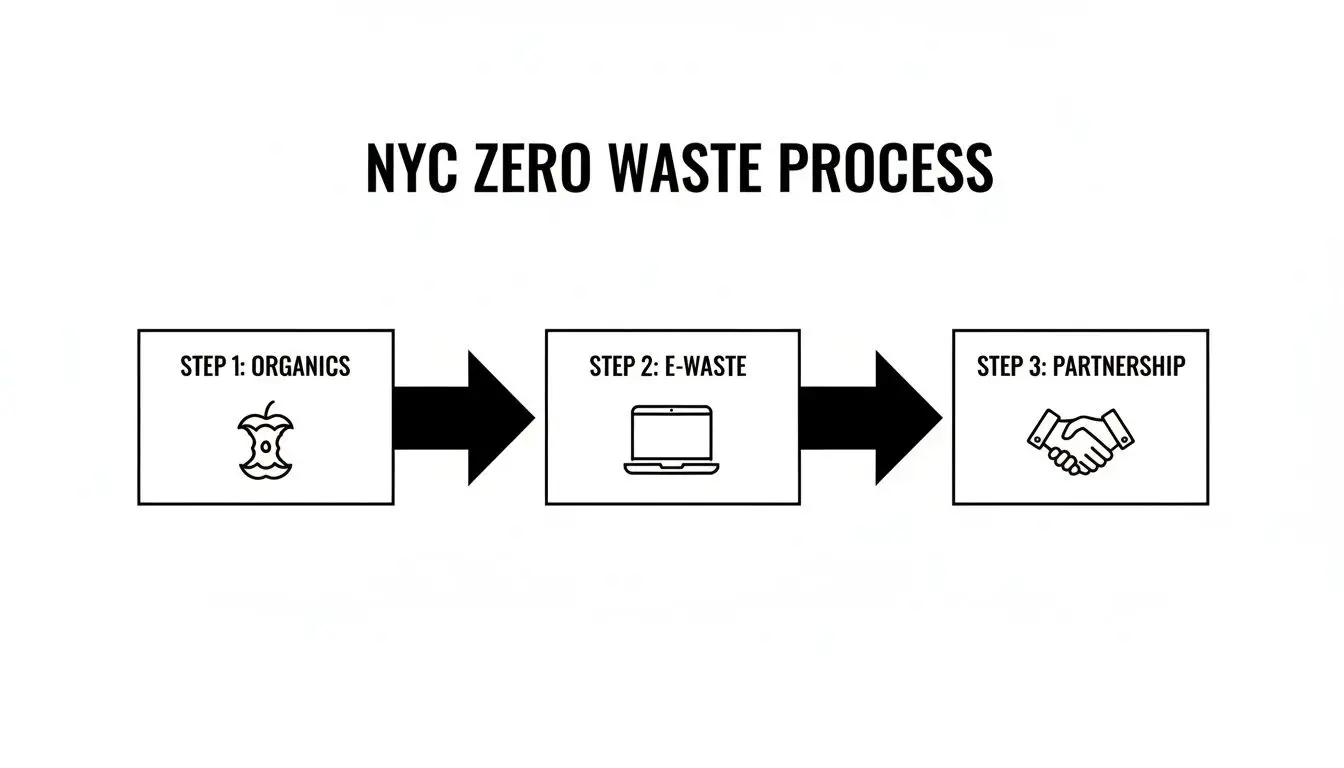
The diagram highlights a strategic progression. It suggests that after mastering common recycling streams like organics, the next logical focus for achieving deep sustainability is tackling complex e-waste through specialized partnerships.
Step 4: Choose a Certified Recycling Partner
Selecting the right partner is crucial—it's about both compliance and your peace of mind. Your chosen vendor should not only handle the logistics but also provide the necessary documentation to prove you have met all legal obligations.
Look for a partner that offers:
- Certified Services: Ensure they hold top-tier certifications like R2 or e-Stewards for responsible recycling.
- Detailed Reporting: They should provide clear asset tracking and a full report of what was received and how it was processed.
- Certificates of Destruction: This is non-negotiable. You need this legal document for every data-bearing device you hand over.
The scale of New York City recycling is immense, and institutional participation is key to its success. According to DSNY data for FY2025, the city’s infrastructure diverted 669,316 tons of waste, with the diversion rate climbing to 21.8% across all streams. Containerized collections, of which a staggering 90% came from institutions, underscore the massive impact businesses have. These figures prove that just as institutions drive paper and organics recycling, they are pivotal for advancing e-waste recycling. You can explore more on the city's progress by reviewing the latest DSNY collection statistics.
Reworx Recycling simplifies this entire process for NYC businesses. We provide free scheduled pickups for qualifying loads, on-site data destruction, and all the documentation you need for your compliance records. By partnering with us, you ensure your IT disposal is secure, responsible, and tied to a social mission that directly benefits the community.
Partner With Reworx Recycling For Your NYC Operations
Navigating the complex web of rules for New York City recycling can be a significant undertaking. For business owners, IT leaders, and sustainability directors, choosing a recycling partner is about more than just checking a compliance box—it’s a strategic decision. This is where Reworx Recycling offers a distinct advantage. As a donation-based social enterprise, our approach is fundamentally different from that of traditional recyclers.
We don’t just handle logistics. When you work with Reworx, you simplify your entire IT asset disposition process, from initial inventory to final compliance reporting. Our services are designed to solve the real-world challenges NYC businesses face, from guaranteeing data destruction to helping you build a compelling corporate social responsibility story.
Turn Your IT Assets Into A Force For Good
With Reworx Recycling, your obsolete IT equipment is not just broken down for raw materials; it is given a new purpose as a powerful tool for community benefit. This is a genuine opportunity to transform what is typically a cost center into a positive brand narrative that creates a tangible impact.
Our social enterprise model ensures your old equipment directly supports:
- Digital Inclusion: Donated computers and laptops are refurbished and provided to individuals and families who lack access to essential technology.
- Workforce Development: We collaborate with programs that use donated hardware to teach valuable tech skills, preparing individuals for new careers.
- Environmental Stewardship: By prioritizing reuse, you become an active participant in the circular economy and reduce the environmental footprint of e-waste.
Your partnership creates a direct link between corporate surplus and community need. Instead of old laptops collecting dust in a storage closet, they can become a student's first computer or a job seeker's key to new opportunities. This is the kind of tangible, positive impact that resonates with employees, customers, and stakeholders.
A Seamless Process Built For NYC Businesses
We understand that running a business in New York City is demanding. That's why we’ve made our services as efficient and non-disruptive as possible. Whether you're undertaking a simple office cleanout or a complex data center decommissioning, we manage every detail so you can focus on your core operations.
Our all-in-one approach includes:
- Free Scheduled Pickups: For qualifying businesses, we offer convenient and free pickup scheduling to remove assets directly from your facility.
- Guaranteed Data Security: We provide certified and auditable secure data destruction, with on-site shredding options available for complete peace of mind.
- Full Compliance Reporting: You’ll receive all the necessary paperwork, including Certificates of Data Destruction, to satisfy internal audits and city regulations.
Discover how easy it is to make a real difference. Transform your end-of-life IT equipment into a story of corporate leadership and community support. Schedule a pickup or request a quote today and partner with Reworx Recycling to redefine what responsible recycling means for your NYC operations.
Frequently Asked Questions
If you're an IT manager, facility coordinator, or business owner in NYC, you've likely grappled with key questions about electronics recycling and data security. These concerns are common, so here are some quick, clear answers to help you navigate your responsibilities.
Are Businesses in NYC Required to Recycle Electronics?
Yes, absolutely. The NYS Electronic Equipment Recycling and Reuse Act is not a suggestion—it is state law. It makes it illegal for any New York business or organization to dispose of e-waste such as computers, servers, and monitors in the regular trash.
Non-compliance is not a minor oversight; it can result in significant fines and legal issues. This is why partnering with a certified electronics recycler is essential. A professional service ensures your equipment is handled correctly and provides the documentation needed to prove compliance, protecting your business from violations.
How Can I Ensure My Company's Sensitive Data Is Destroyed?
The only way to be 100% certain your business is protected from a data breach is through physical destruction. Simply wiping or degaussing hard drives is no longer sufficient. With sophisticated recovery tools, supposedly "deleted" data can often be retrieved, leaving your company exposed.
At Reworx Recycling, we provide secure data destruction you can rely on. Our on-site hard drive shredding pulverizes storage media into tiny, unrecoverable fragments. We issue a formal Certificate of Data Destruction for your records, giving you definitive proof that your sensitive information has been permanently eliminated.
What Is the Difference Between Residential and Commercial E-Waste Services?
Residential services, like NYC's curbside programs, are designed for households disposing of a single home computer. They have strict limits on the quantity and type of equipment they accept and are not equipped for business-level needs.
A commercial IT Asset Disposition (ITAD) service, which is what we provide at Reworx Recycling, is a comprehensive solution tailored specifically for businesses. Our services are built to handle:
- The logistics of bulk office cleanouts, facility cleanouts, or data center decommissioning.
- A secure chain of custody with detailed asset tracking from start to finish.
- Certified data destruction for every single storage device.
- Comprehensive reporting for your security, compliance, and ESG documentation.
Your compliance needs don't have to be a burden. They can be a powerful story of corporate responsibility and positive community impact. Reworx Recycling makes it easy for NYC businesses to handle IT equipment disposal securely and sustainably. Visit our site to learn more about our donation-based recycling programs and schedule your pickup today.