
Corporate E-Waste Recycling in Georgia: A Practical Guide for Atlanta-Area Businesses
For corporate e-waste recycling in Georgia, businesses can arrange a scheduled pickup, gather retired equipment in one place, and have data-bearing devices securely wiped or shredded before responsible recycling. For Atlanta offices, a little planning around inventory, access, and data records makes a cleanout easier to manage. At Reworx Recycling, we’re headquartered in Smyrna and […]
Data Destruction Services Near Me: What to Ask Before You Hand Over a Drive
If you’re comparing data destruction services near me, ask how each drive will be wiped or destroyed, how it will be tracked from your office to processing, and what proof you’ll receive. The right method depends on the media type and whether you want equipment to remain reusable. Before handing anything over, get clear answers […]
Electronics Recycling Near Me: How to Find the Right Service for Your Business
For a business searching for electronics recycling near me, the right service is one that can handle your equipment safely, explain what happens to your data, and make collection convenient. A recycler does not have to be around the corner: many providers, including Reworx Recycling, offer scheduled nationwide pickup, so you may not need to […]
How to Dispose of Old Batteries and Devices That Contain Them
Most household batteries should not go in the trash or curbside recycling. Single-use alkaline batteries can often go to a drop-off that accepts them, while rechargeable and lithium batteries need a dedicated collection point. If a battery is swollen, damaged, or built into a device, keep it with the device and contact an electronics recycler […]
Degaussing vs Shredding: Which Data Destruction Method Fits Your Equipment
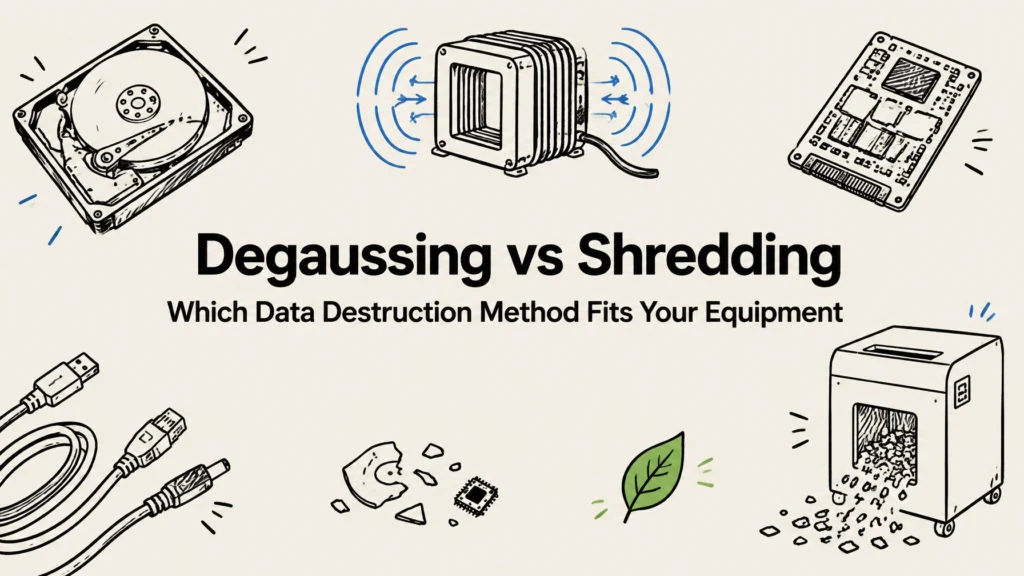
Wiping, degaussing, crushing, and shredding can all remove data, but each method suits different media and offers different proof. Degaussing works on magnetic media, while shredding destroys the media and prevents reuse. A verified software wipe can protect data while keeping a working device reusable. Compare the data destruction methods Method What it works on […]
Hard Drive Disposal Mistakes That Put Your Data at Risk
Most data leaks from retired hardware aren’t clever hacks. They happen because a drive was deleted and handed off, or because someone forgot an old drive in a drawer. Here are common hard drive disposal mistakes and what to do instead. Eight hard drive disposal mistakes to avoid Relying on delete or a factory reset. […]
Run an IT Asset Inventory Audit Before You Recycle Anything
An IT asset inventory audit is a documented count of what you own, its condition, and where it sits, done before anything leaves the building. It helps you choose reuse, buyback, or recycling based on a record instead of a guess. It is also the cheapest part of IT asset disposition: a little careful counting […]
E-Waste Disposal for Small Businesses: A Simple Plan That Actually Gets Done
For a small business, a practical e-waste disposal plan is to name one owner, keep a running list of retired equipment, store it in a locked area, and schedule one pickup instead of making repeated small trips. Handle the data question first, then the hardware: decide whether each device should be securely wiped or its […]
IT Asset Disposition for Schools: A Safe Retirement Plan for Student Data
IT asset disposition for schools means retiring devices with student and staff data destroyed first, usable equipment routed to reuse or donation, and the rest recycled responsibly, all with records you can hand to a board or auditor. A clear process helps districts, colleges, and universities protect information, keep track of equipment, and plan a […]
What Happens to Your E-Waste After Pickup: Inside the Recycling Process
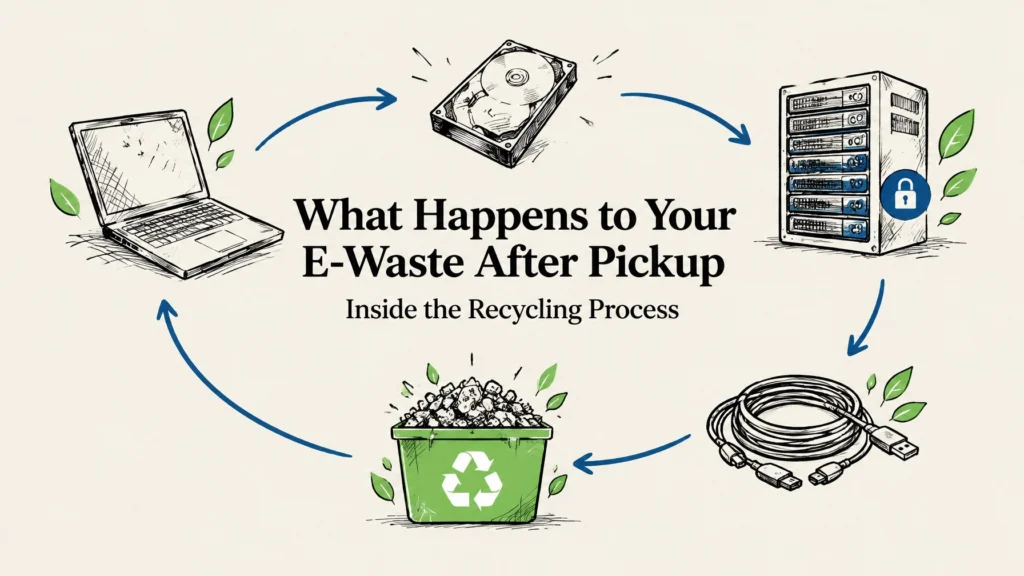
After pickup, your equipment is inventoried, data-bearing devices are wiped or their drives are shredded, and working gear is assessed for reuse. Equipment that can’t be reused is separated into materials and sent through responsible recycling streams. Each item should have an accounted-for route, not a trip to a landfill or an unexplained journey out […]