Pulling recalled products from store shelves is only the first step. A recall is closed when every pulled unit is reconciled to a remedy approved by the recall notice, with records showing where it went and what happened to it.
For retail operations and distribution center teams, that means controlling inventory across stores, returns, warehouses, and shipments in transit. Do not send recalled stock to salvage, donation, resale, or destruction until the manufacturer’s instructions and any applicable regulator requirements confirm the right path.
Start with control, not a disposal booking
A product recall can involve more than items displayed for sale. Affected units may be in back rooms, customer-return areas, receiving bays, repair stations, fulfillment centers, or on their way between locations. Online orders and third-party channels may need attention too, depending on the recall instructions.
Assign a recall owner who can coordinate store operations, inventory control, safety, legal, and the manufacturer. Make sure each location knows how to identify affected products using the recall notice’s model, SKU, lot, or serial information. If an identifier is unclear, ask the recall owner or manufacturer before deciding whether a unit is affected.
Keep the recall notice and written remedy instructions accessible to every team handling the stock. Manufacturer instructions govern the proposed remedy, and regulators may require notification before destruction. In some recalls, they may ask to witness the work or request an affidavit or other proof. Confirm requirements before scheduling a truck or authorizing disposal.

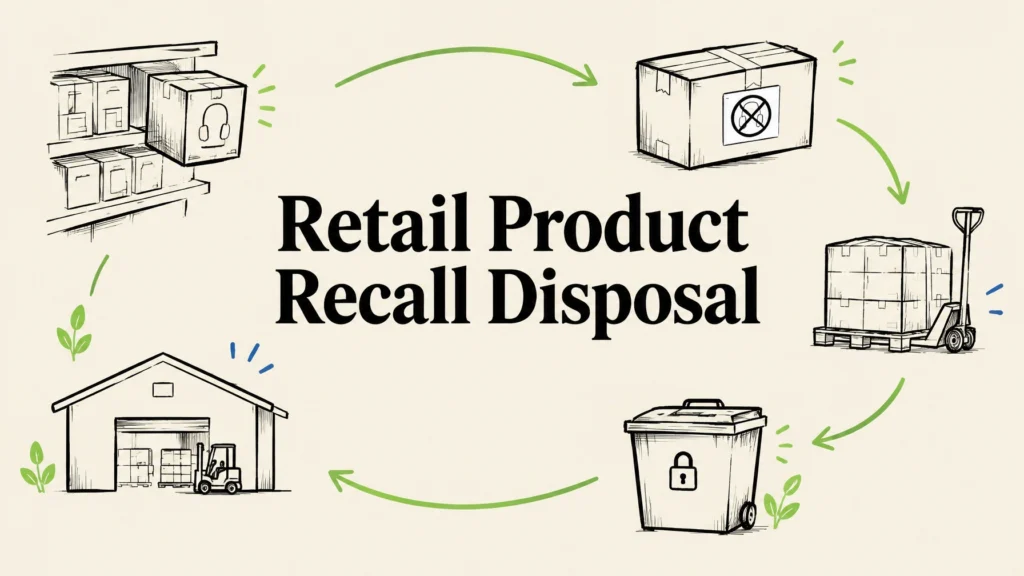
Store-to-destruction process
Use one consistent sequence across locations. A shared process helps store teams, distribution centers, and vendors work from the same product list and avoid accidental restocking.
- Freeze sales and sweep all locations. Block affected items from point-of-sale and online sale as directed. Check shelves, returns desks, stockrooms, distribution centers, repair areas, open orders, and goods in transit. Record each location’s count and report exceptions to the recall owner.
- Quarantine and label. Move identified units to a designated area that is separate from saleable inventory and ordinary returns. Use clear labels with the recall reference and product identifiers, and limit access to staff who need to handle the goods. Do not rely on a system hold alone if physical stock could be picked or shipped.
- Confirm the remedy. Check the recall notice and obtain written clarification if the instructions do not clearly cover the product, its condition, or the proposed disposition. Confirm whether the units must be returned, reworked, diverted under specific conditions, destroyed, or recycled. Ask whether notification, a witness, or particular closeout records are required before work begins.
- Route each lot by its approved path. Keep product groups distinct when they have different instructions. Provide the receiving manufacturer or service provider with the recall reference, product identifiers, quantities, packaging requirements, and any handling instructions.
- Log every handoff. Record the date, location, responsible party, quantity, and destination whenever goods move. Keep return authorizations, shipping records, pickup receipts, and vendor paperwork with the recall file. A pickup receipt shows that custody changed; it does not, by itself, prove the remedy is complete.
- Reconcile and close. Compare the quantities found, shipped, returned, repaired, diverted, or destroyed against the inventory record and approved remedy. Investigate differences rather than rounding them away. Keep the final disposition documents with the recall notice and closeout record.

Choose the path the recall allows
The right disposition depends on the recall instructions, product condition, and any applicable regulator requirements. A convenient destination is not automatically an approved one. When instructions are incomplete, pause and confirm the remedy before moving the product out of quarantine.
| Disposition path | Use when | Proof to keep |
|---|---|---|
| Return to manufacturer | The notice or written instructions direct a return | Return authorization, shipment record, and receipt or quantity confirmation |
| Rework | The manufacturer approves a repair or other corrective work | Written authorization, affected-unit record, and completion confirmation |
| Approved diversion | A specific alternative destination or use is approved in writing | Approval and records identifying the destination and quantity |
| Destruction | The recall instructions permit or require destruction | Approval, handoff and completion records; any requested witness or affidavit documentation |
| Wipe, then recycle data-bearing devices | The approved remedy allows recycling after data is securely removed | Asset or batch record, data-destruction confirmation, and recycling documentation |
Do not decide to donate or resell recalled units because they appear usable or because storage space is tight. Recalled stock does not enter donation channels. Cleared, non-recalled equipment can support communities in need through Reworx’s mission to bridge the digital divide and help marginalized and vulnerable people access technology for education and career readiness. Keep that work entirely separate from recall inventory.
Make reverse logistics traceable
Reverse logistics is the controlled movement of affected goods from stores and distribution centers to the remedy destination. The more locations involved, the more important it is to use consistent labels, counts, and handoff records.
Before a transfer, confirm that the destination is approved and that the carrier or receiving party understands the recall instructions. Keep affected goods separate from ordinary returns and other surplus inventory. When a shipment arrives, compare the receiving record with what the sending location reported. Escalate any mismatch so it can be resolved in the recall file.
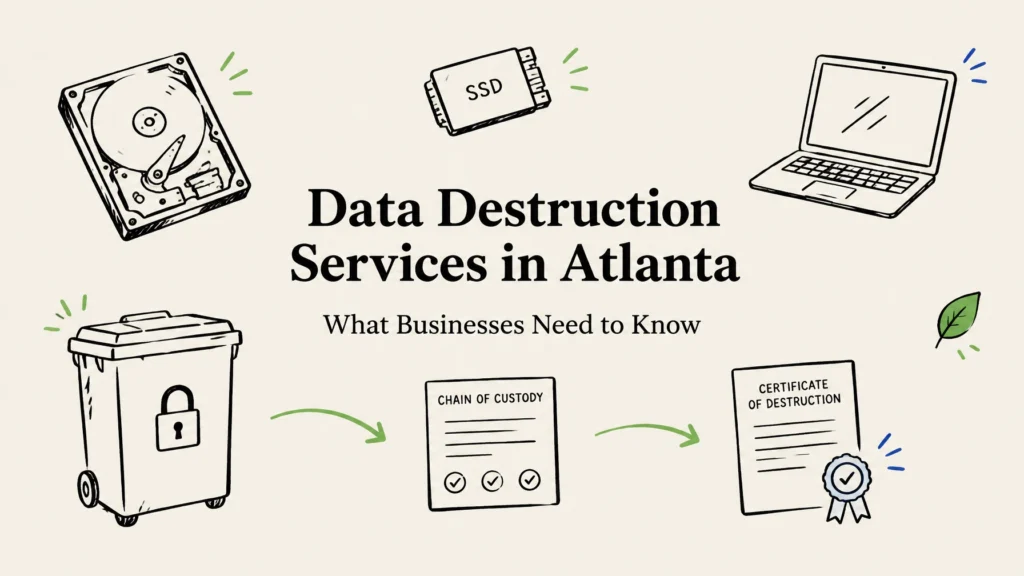
A practical record set can include the recall notice, store and warehouse counts, quarantine logs, shipment or return records, written remedy approval, and final completion evidence. Agree with the recall owner on the records required for the specific recall. For questions about destruction documentation, see our certificate of destruction guidance for recalls.
If recalled electronics contain storage media, include data handling in the approved plan. Reworx can provide free data destruction through secure wiping using a NIST 800-88-style process or hard drive shredding, with certificates of destruction. For more about these options, visit our hard drive shredding service page. A short triage note: isolate damaged or otherwise concerning lithium-battery products and confirm the approved handling route before transport; see our recalled battery disposal guide for battery-specific details.

Coordinate pickup and vendor closeout
A service provider should understand that recalled inventory is not ordinary surplus. Before collection, share the product identifiers, quantity, approved route, any packaging instructions, and the records your team needs for closeout. Ask how the provider will keep the material identifiable and separate through the handoff and final processing.
For electronics that are approved for recycling, Reworx Recycling offers certified eco-friendly recycling with responsible downstream processing. We provide free nationwide business pickup across all 50 states, free data destruction, and hard drive shredding with certificates of destruction. Our IT asset disposition services can support business equipment projects that need coordinated handling.
We can work with after-hours or flexible scheduling to fit store and distribution center operations, and you can text us for a fast response. Tamper-proof drop-off boxes may suit approved electronics collection, but recalled stock should only use a drop-off route if the recall plan and chain of custody allow it. Reworx is headquartered in Smyrna, Georgia, in metro Atlanta, and serves organizations nationwide.
Frequently asked questions
What do retailers do with recalled products?
Retailers stop sale, search all relevant locations, and quarantine affected units. Then they follow the remedy in the recall notice and document each transfer and final outcome. The approved path may be return, rework, diversion, destruction, or recycling under specific conditions.
Can recalled products be donated or resold?
Do not donate or resell recalled stock unless the recall instructions explicitly authorize a specific path. A product that seems functional may still be subject to restrictions. Keep recalled inventory out of donation and resale channels unless written instructions say otherwise.
How do I dispose of recalled inventory?
First confirm the remedy with the recall owner and check whether a regulator requires notice or other involvement before destruction. Keep inventory labeled and quarantined, use an approved destination, and retain records that connect the units to their final disposition.
How do retailers handle recalled electronics with data?
Follow the approved recall remedy and protect any data stored on the devices. If recycling is authorized, arrange secure data wiping or hard drive shredding and retain the related records. Reworx offers free data destruction and nationwide business pickup for eligible electronics projects.
Plan the next handoff
Before recalled goods leave a store or distribution center, confirm the approved remedy, the receiving destination, and the records needed to reconcile the units. To discuss a business electronics pickup, secure data destruction, or hard drive shredding, schedule a pickup with Reworx Recycling or text us for fast service.