When it's time to retire old computers, Atlanta businesses need more than just a vague plan. From the bustling tech hubs in Midtown to the corporate headquarters in Buckhead, a rock-solid, secure process is essential. This process starts with a clear inventory, moves on to securely destroying all data, and ends with a trusted, certified IT Asset Disposition (ITAD) partner like Reworx Recycling. This isn't just about clearing out a storage room—it's a critical function that protects your company from devastating data breaches and serious environmental liability.
Why Smart Computer Disposal Is Non-Negotiable for Atlanta Businesses
For any IT manager or business owner in the Atlanta metro area, the moment a computer is declared obsolete, a new set of responsibilities kicks in. Getting rid of old computers is a lot more complicated than just pulling the plug. Every retired machine is a treasure trove of sensitive corporate data, a container of potentially hazardous materials, and a huge liability if you handle it wrong. One misstep can expose your business to steep regulatory fines, damage your reputation, and open the door to security threats.
On the flip side, a well-thought-out IT equipment disposal plan turns this challenge into a strategic advantage. It demonstrates your company's commitment to corporate social responsibility (CSR), keeps you compliant with data privacy laws, and can even support community initiatives right here in Georgia when you partner with a social enterprise like Reworx Recycling.
The Hidden Risks in Outdated Hardware
Think about a common scenario: a mid-sized marketing firm in Atlanta is upgrading its entire team to new laptops. The old ones? They're stacked in a closet, waiting for someone to figure out what to do with them. Without a formal plan for this office cleanout, these devices create a minefield of risks:
- Data Vulnerability: Every single laptop holds client lists, financial records, and proprietary marketing strategies. Even if the files were "deleted," that data is ridiculously easy for someone to recover without proper, certified data destruction.
- Environmental Non-Compliance: Just tossing those laptops in a dumpster could violate environmental laws, including Georgia's regulations on solid waste. Electronics are packed with lead, mercury, and other toxins that have to be managed correctly. You can learn more about the environmental impact of electronic waste and see why this is so critical for businesses today.
- Lost Value: Some of the newer laptops might still have resale value. Others could be refurbished and donated to local Atlanta nonprofits, which generates goodwill and maybe even a tax benefit. A pile of laptops in a closet is just unrealized potential.
This isn't an isolated problem. The global challenge of managing e-waste is staggering. A recent UN report found that in 2023, only 17% of all e-waste was formally collected and recycled. That leaves a massive 83% unaccounted for, often ending up in landfills. To really get a handle on why this matters, it's worth reading this essential guide to e-waste recycling.
Choosing the right partner isn't just a logistical decision—it's a security and brand reputation decision. A certified ITAD provider offers an auditable process that protects your business from the moment a device leaves your premises.
To help you navigate this, here's a quick rundown of the factors you should be thinking about.
Key Decision Factors for Computer Disposal
| Consideration | Why It Matters for Your Business | Best Practice |
|---|---|---|
| Data Security | A single data breach can lead to massive fines, lawsuits, and irreversible reputational damage. | Partner with an ITAD vendor that provides certified data destruction with auditable reports. |
| Environmental Compliance | Improper disposal violates laws like the RCRA, leading to fines and negative press. | Work only with R2 or e-Stewards certified recyclers who guarantee responsible handling of hazardous materials. |
| Chain of Custody | You are liable for your assets until they are confirmed destroyed or recycled. You need proof. | Demand detailed documentation, including serial number tracking and Certificates of Destruction/Recycling. |
| Potential for Value Recovery | Newer equipment may still have resale value, which can offset the costs of disposal. | Choose a partner who offers remarketing services and provides transparent revenue sharing. |
| Logistics and Cost | Managing pickup, transportation, and processing can be complex and expensive if handled internally. | Get a clear quote that covers all services, from secure transport to final reporting. |
Thinking through these points is the first step toward building a responsible and secure disposal program.
From Liability to Opportunity with Reworx Recycling
This is where a dedicated partner like Reworx Recycling changes the game. We specialize in turning the headache of computer recycling into a seamless, secure, and impactful process for businesses across Atlanta and the state of Georgia. Our donation-based recycling model ensures your retired IT assets are handled responsibly, with a focus on both environmental stewardship and community benefit. When you work with us, you aren't just getting rid of old equipment; you're actively contributing to a circular economy and supporting digital inclusion initiatives right here in our community.
Preparing Your IT Assets for Disposition
Before a single device leaves your building, you need a game plan. Kicking off the disposal process isn't just about clearing out a storage closet; it's about building a clear, defensible audit trail. This is what protects your business from compliance headaches and data breaches later on. A rushed job is how sensitive information walks out the door and valuable equipment gets written off as worthless.
The first real step is getting a handle on what you have. This means creating a comprehensive inventory of all the hardware you're retiring. Don't just count the boxes—you need a detailed log. For each device, capture its serial number, asset tag, model, and its last known user or department. This list becomes the foundation for your entire IT asset disposition (ITAD) process. If you want to dig deeper into why this is so critical, we've covered the importance of IT inventory audits before recycling in another guide.
Categorizing for Maximum Value and Impact
With your inventory in hand, it's time to sort everything. The goal here is to figure out the best path forward for each piece of equipment based on its age and condition. Believe it or not, not everything is destined for the shredder. A lot of old tech can still have a second life.
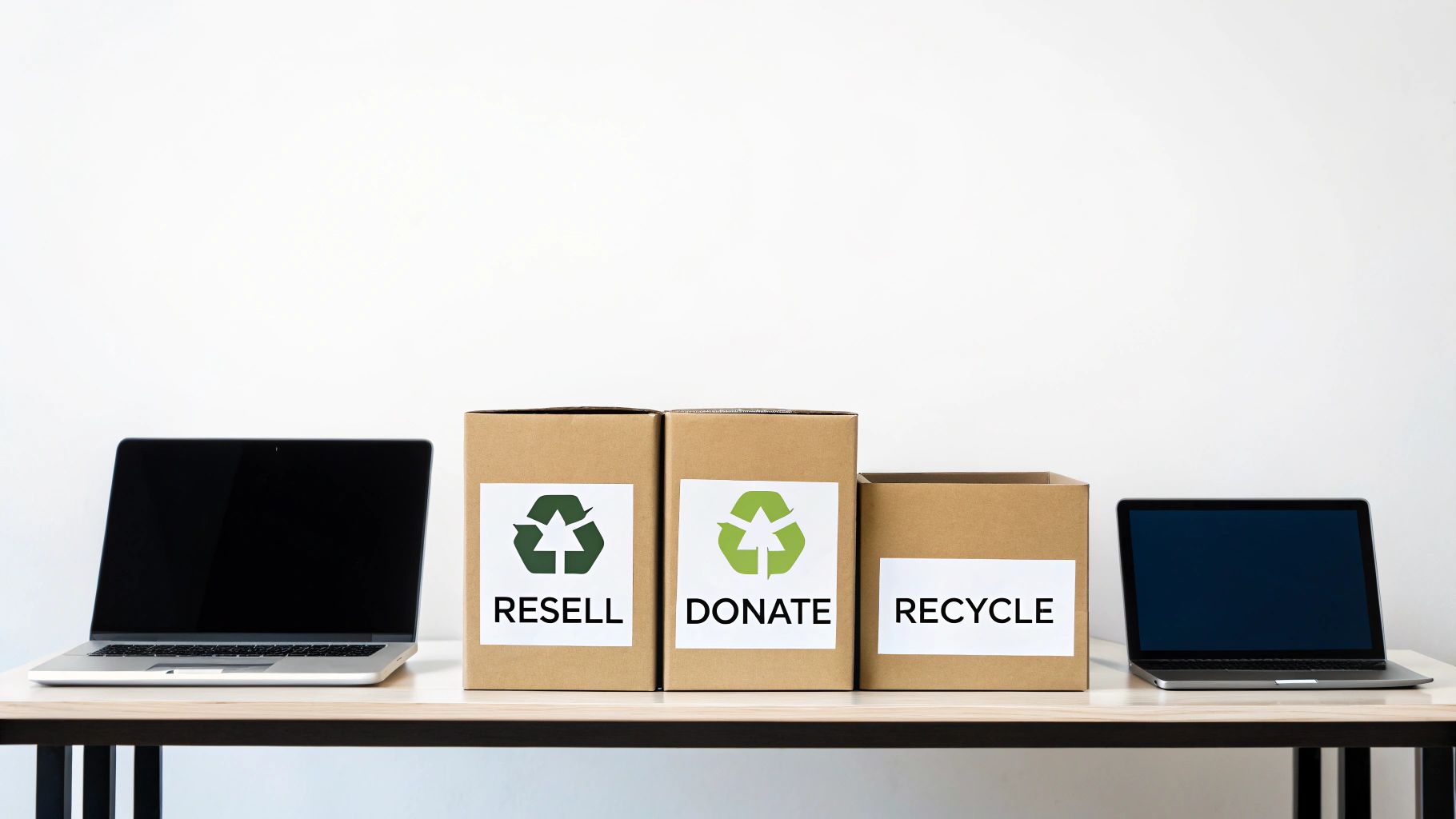
A simple sorting system can make a huge difference. Try breaking it down like this:
- For Resale: These are your newer machines, typically 3-4 years old or less and still in good working order. They often hold real market value and are perfect candidates for equipment buyback programs.
- For Donation: You might have functional but older computers that aren't worth much on the resale market. These are ideal for donation. When you partner with a social enterprise like Reworx Recycling, these assets can make a real impact at schools, nonprofits, or digital inclusion programs in the Atlanta area.
- For Recycling: This is the end of the line for anything non-functional, damaged, or just too old to be useful. These devices need to go to a certified recycler to ensure materials are recovered responsibly.
This straightforward approach transforms a pile of e-waste into a portfolio of assets. You're not just getting rid of stuff; you're making smart financial and socially responsible decisions.
The Critical Step of Data Backup and Verification
Once the hardware is sorted, your focus has to shift to the data. It's absolutely essential to perform a final backup of any important information before a single drive gets wiped. This is your safety net, preventing the accidental loss of company records or valuable intellectual property.
But a backup is useless if it doesn't work. You have to verify it. Test the integrity of your backup files and make sure they're complete and accessible. Finding out your backup is corrupted after the original drive has been sanitized is a nightmare scenario—and one that is completely preventable.
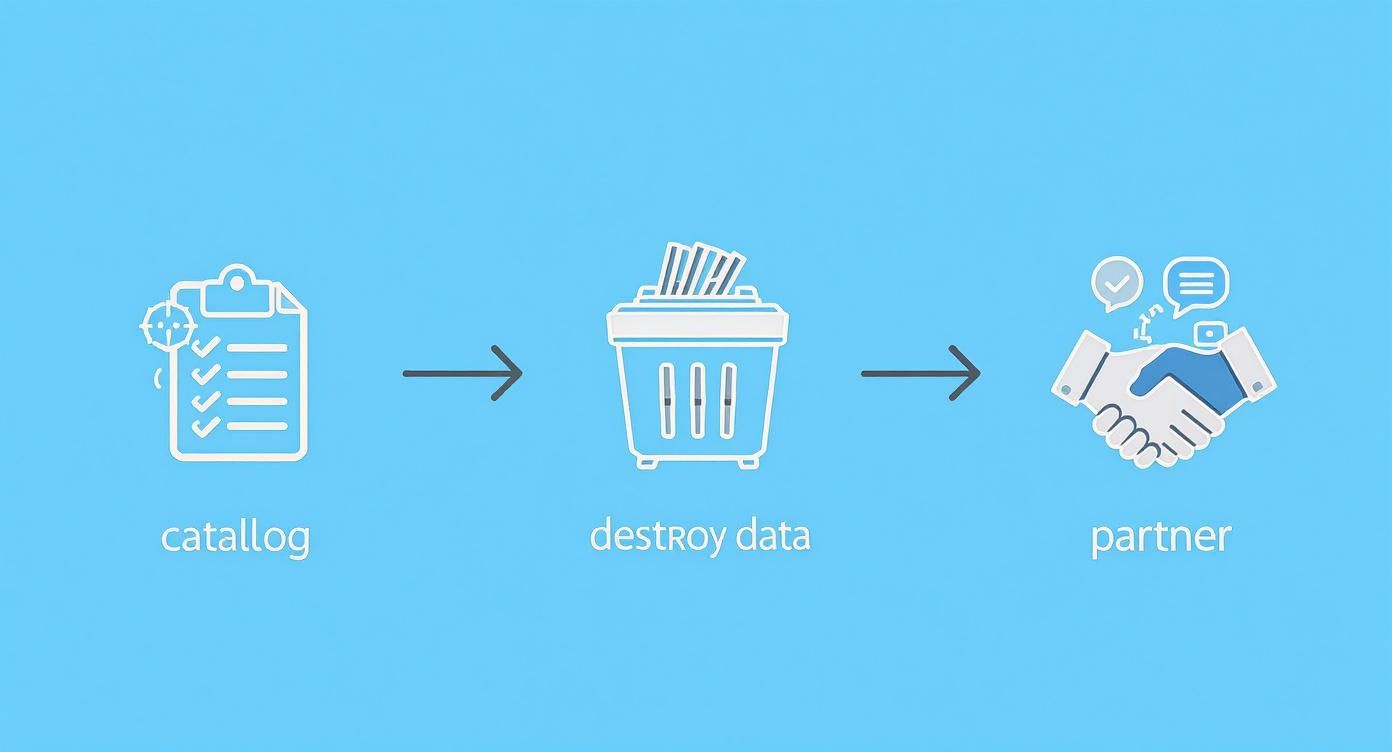
Following this flow ensures every step is documented and secure, giving you an unbroken chain of custody from the moment a device leaves your control.
Final Physical Preparations
The last thing to do before scheduling a pickup is to get all the equipment in one place. Designate a secure, central spot to store all the devices you've inventoried. This keeps things from getting lost in the shuffle and makes the actual pickup much smoother for your ITAD partner.
An organized staging area is key to an efficient and accurate pickup. It allows your recycling partner to quickly verify the inventory against your list, ensuring every single asset is accounted for before it ever leaves your facility.
When you're getting old computers ready for transport, proper handling matters. For some general tips on safely packaging electronic devices, you can prevent unnecessary damage or environmental issues. By taking care of these prep steps, you're setting yourself up for a disposal process that's smooth, secure, and fully compliant.
Your Data's Last Line of Defense: Destruction
Once you’ve backed up everything important, it’s time to make sure the old data is gone. For good. Don’t be fooled into thinking that dragging files to the trash or doing a quick format on a hard drive is enough. That's like leaving your sensitive client files in an unlocked filing cabinet on the curb—the data is still there, just waiting for someone with basic recovery software to find it.
To truly protect your organization, you need a bulletproof plan for secure data destruction. This isn't just a suggestion; it's a non-negotiable step in responsibly disposing of old computers.
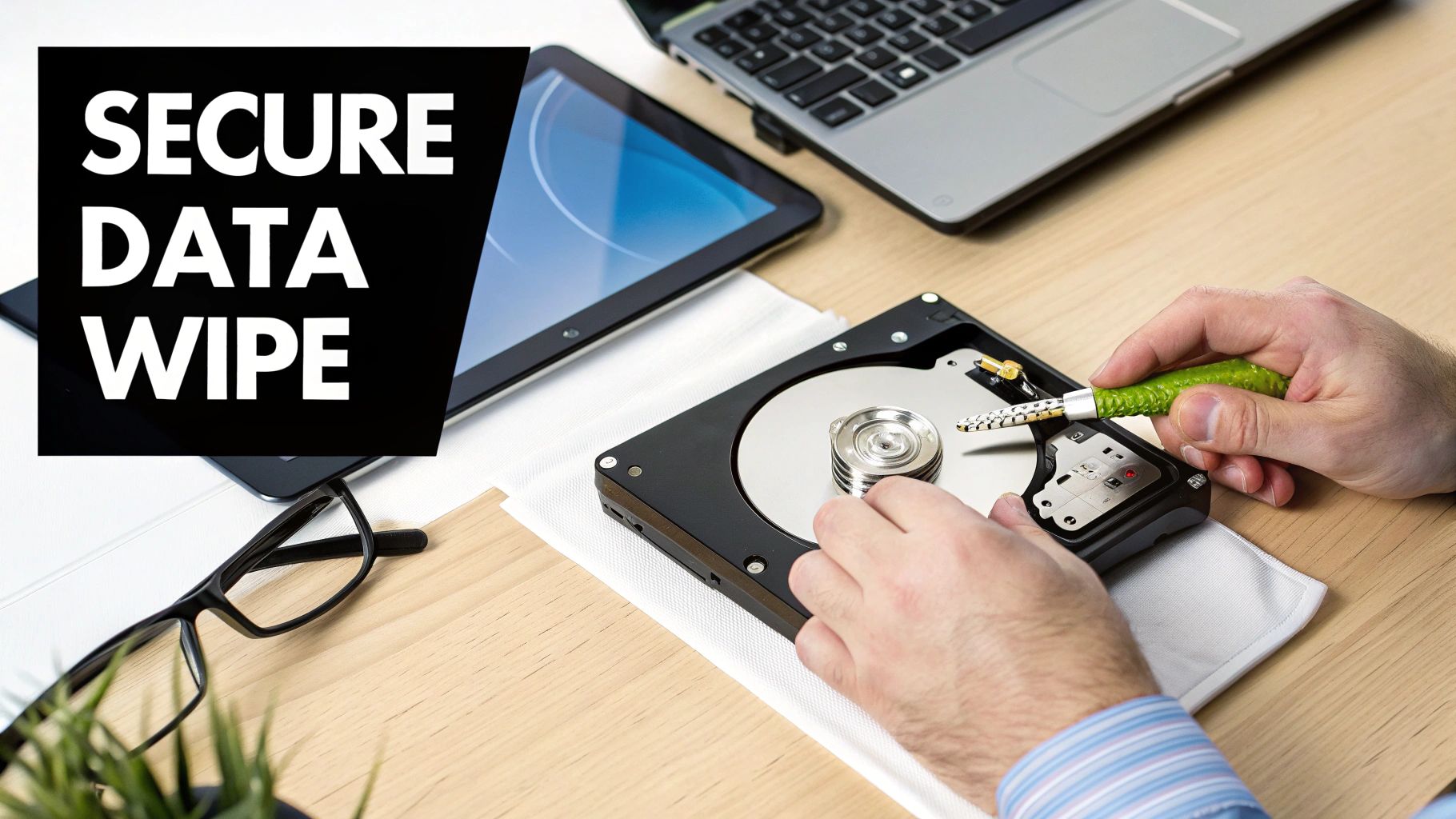
Software-Based Wiping for Reusable Drives
If you have devices that are slated for resale or donation, software-based wiping is your go-to method. This process uses specialized programs to overwrite the entire drive—sometimes in multiple passes—with random, meaningless data. It effectively scrubs the storage media clean, making the original information impossible to get back.
When you're looking at software, make sure it meets recognized industry standards. The two big ones are:
- DoD 5220.22-M: This is the U.S. Department of Defense standard, which involves a three-pass overwrite. It's a classic for a reason.
- NIST 800-88: These are modern guidelines from the National Institute of Standards and Technology that cover everything from a simple "Clear" to a full "Destroy."
This approach keeps the hard drive or solid-state drive (SSD) physically intact, preserving its value for the next user. Working with a certified ITAD partner like Reworx Recycling ensures it's done right and fully documented. We've put together a complete guide to secure data destruction that dives deeper into these methods.
Physical Destruction for End-of-Life Assets
For drives that are too old, broken, or hold incredibly sensitive data, there's only one surefire answer: physical destruction. There's no coming back when a hard drive is smashed into tiny pieces. This is often the required method for industries with strict compliance rules, like healthcare (HIPAA) or finance.
There are two main ways to get this done:
- Degaussing: Think of a magnet so powerful it scrambles the magnetic field on a traditional hard disk drive (HDD), instantly wiping the data. Just remember, this technique is useless on modern SSDs, which don't use magnetic storage.
- Shredding: This is the ultimate solution. An industrial shredder physically pulverizes the drives into small fragments of metal and plastic. Game over for that data.
A professional partner like Reworx Recycling can handle shredding right at your facility or take it back to ours, giving you total peace of mind. The electronics recycling market has exploded, hitting an estimated USD 22,210 million by 2025. Computers make up a huge chunk of that—about 35%—because of how fast they become obsolete.
A Certificate of Data Destruction isn't just a piece of paper—it's your legal proof of due diligence. This document confirms that your company's data has been securely and permanently destroyed in compliance with privacy regulations like GDPR, HIPAA, and FACTA.
The Importance of Certification
No matter which method you go with, the process isn't truly complete until you have a Certificate of Data Destruction in hand. This official document is your auditable proof, listing the serial numbers of the devices, the date of destruction, and the method used.
In the case of a compliance audit or legal question, that certificate is your best defense. It proves you took all the right steps to protect sensitive information and effectively transfers the liability from your shoulders to your certified ITAD partner. At Reworx Recycling, providing this crucial documentation is a fundamental part of our service, keeping your business secure and compliant.
Choosing the Right Path for Your Old Computers
Once your data has been securely wiped for good, your attention can shift from digital security to the physical hardware. This is a critical fork in the road. Your next move can put money back in your budget, make a real difference in the community, or simply ensure your old gear is handled responsibly.
Deciding whether to resell, donate, or recycle isn't always cut and dry, but each path has clear benefits. Reselling can recoup value from a recent tech refresh. Donating equipment gives your brand a boost and empowers others. And recycling is the non-negotiable final step for gear that has truly reached the end of its life.
Evaluating the Resale Potential of IT Assets
If you have IT equipment that's relatively new—think three to four years old or less—and still works perfectly, reselling is almost always the smartest financial move. This route works best for things like high-performance laptops, servers, and networking hardware that still have a solid value on the secondary market.
Any capital you recover can be funneled right back into your technology budget, making your next upgrade a little easier on the books.
But getting a good price involves more than just posting a listing online. A much easier way is to find an ITAD partner that offers transparent equipment buyback programs for offices. They handle all the legwork and make sure you get a fair price without the administrative headache.
The Power of Donation Through a Social Enterprise
What about the computers that work fine but are too old to fetch a decent resale price? Don't just stick them in a closet. This is where donation-based recycling becomes an incredibly powerful option, especially when you partner with a social enterprise like Reworx Recycling.
Donating your retired but still usable IT assets is one of the best ways to amplify your corporate social responsibility (CSR) efforts. That old laptop can become a game-changer for a student in Atlanta who needs it for homework, an adult searching for jobs online, or a small non-profit that can't afford new tech. It's a direct way to help bridge the digital divide.
Donating your old computers does more than just clear out storage space; it converts a depreciated asset into a tangible community benefit. This act of corporate citizenship generates powerful brand goodwill and demonstrates a genuine commitment to social impact.
By choosing a partner that facilitates donations, you ensure your equipment gets a second life where it can do the most good. We handle everything from the secure data wipe to refurbishment and placement with community organizations, giving you a powerful story of positive impact.
Responsible Recycling for End-of-Life Equipment
For any device that’s broken, damaged, or just too ancient to be useful, responsible recycling is the only way to go. According to the U.S. Environmental Protection Agency (EPA), 25 states and the District of Columbia have laws that mandate e-waste recycling.
Simply put, tossing old computers in the dumpster isn't just bad for the environment—it can also be illegal.
Certified electronics recycling guarantees that hazardous materials like lead, mercury, and cadmium are managed safely. It also allows for the recovery of valuable resources—gold, silver, copper, and aluminum—that can be used to manufacture new products. It’s a key part of building a circular economy and reducing the need to mine for new materials. When you work with a certified recycler, you get the paperwork to prove your assets were handled correctly, protecting your business from any potential liability.
To make the decision a bit clearer, I've put together a quick comparison of the three main paths for your old IT gear.
Computer Disposal Options Comparison
This table breaks down the pros and cons of each disposal method to help you see which one fits best for different types of equipment.
| Disposal Method | Key Benefits | Primary Considerations | Best For |
|---|---|---|---|
| Reselling | – Maximum financial return – Offsets cost of new equipment |
– Requires newer, high-value assets – Involves logistics and market knowledge |
Laptops, servers, and networking gear under 4 years old in good condition. |
| Donating | – High social impact and CSR value – Supports community programs – Potential tax benefits |
– Equipment must be functional – Requires a reputable non-profit partner |
Functional computers and peripherals that have lost most of their resale value. |
| Recycling | – Ensures environmental compliance – Prevents hazardous waste pollution – Recovers valuable raw materials |
– No direct financial return – Necessary for non-functional items |
Damaged, obsolete, or non-functional equipment of any age. |
In the end, a smart IT asset disposition strategy will probably use a mix of all three options. An experienced partner like Reworx Recycling can take a look at your inventory and help you figure out the most logical—and beneficial—destination for every single asset.
Finding the Right Partner to Handle Your Old IT Gear
You've backed up your data and decided which computers are heading out the door. Now comes the most important step: choosing the right IT Asset Disposition (ITAD) partner. This isn't just about finding someone to haul away old equipment. It's about entrusting a partner with your company's data security, legal compliance, and reputation.
Picking an uncertified recycler is a huge gamble. You could be on the hook for data breaches or environmental fines down the road. The right partner, on the other hand, acts as an extension of your own team, protecting you from risk while ensuring your company's commitment to sustainability is upheld.
The world of electronics recycling is surprisingly complex, and not all vendors operate at the same standard. Your mission is to find a partner who offers a completely transparent, auditable process from the second your gear leaves your office to its final destination. This is where certifications become your best friend.
Why Certifications Are a Must-Have
In the ITAD industry, certifications are everything. They're not just fancy badges; they represent rigorous, independent audits that confirm a recycler’s commitment to data security, environmental safety, and ethical operations. When you see these logos, you can trust the provider is held to the highest standards.
Two certifications, in particular, should be on your checklist:
- R2 (Responsible Recycling): The R2 Standard covers the entire lifecycle of an electronic device. It mandates strict protocols for protecting the environment, securing data, and managing the entire recycling chain. An R2-certified partner like Reworx Recycling gives you a guarantee that hazardous e-waste won't be illegally dumped or exported.
- e-Stewards: Developed by the environmental watchdog Basel Action Network, the e-Stewards Standard is famous for its zero-tolerance policy on exporting hazardous e-waste to developing nations. It also has incredibly high standards for data security and social responsibility.
Working with a certified partner is the single best thing you can do to protect your business from liability. It's your proof of due diligence and shows that your retired assets are being managed in a way that meets both legal standards and your own corporate values.
Entrusting your retired IT assets to a certified partner is not merely a best practice; it is your ultimate safeguard. A Certificate of Recycling or Destruction from a certified vendor is your legal proof that you have fulfilled your environmental and data security obligations.
The Facility Cleanout and Logistics Process
A true ITAD professional makes the physical removal of equipment—often called a facility cleanout or office cleanout—look easy. But behind the scenes, it's a carefully orchestrated process designed for maximum security. It's much more than just showing up with a truck.
Here’s what the process should look like with a top-tier provider like Reworx Recycling:
- Secure On-Site Service: Our team arrives at your Atlanta location with locked, secure containers specifically designed for transporting sensitive electronics.
- Inventory Verification: We'll meticulously check the equipment being removed against the inventory list you created, ensuring every single asset is accounted for.
- Chain-of-Custody Documentation: The moment we take possession, a formal chain-of-custody document is started. This paper trail tracks your assets through every step of the process, leaving no gaps.
This level of detail is absolutely critical, especially if you're in a regulated field like healthcare or finance. It ensures no device can just "go missing." To see how this fits into the bigger picture, you can learn more by reading our guide on what IT Asset Disposition is and why it's so vital for any modern business.
The Power of Detailed Reporting for CSR and Audits
Today, everyone from customers to regulators expects transparency. A great ITAD partner gets this and provides reporting that's far more than just a simple invoice. This documentation is pure gold for your Corporate Social Responsibility (CSR) reports and any compliance audits you might face.
Your final reporting package should be comprehensive and include:
- A Certificate of Data Destruction, listing the serial numbers of every single drive that was wiped or destroyed.
- A Certificate of Responsible Recycling, which confirms everything was handled in an environmentally compliant way.
- An Asset Value Recovery Report if any of your equipment was refurbished and resold.
- A Social Impact Summary if items were donated, detailing the positive community benefits.
This kind of reporting provides the tangible proof you need for your annual sustainability reports and gives auditors the concrete evidence they demand. With a partner like Reworx Recycling, you can have complete confidence that every computer is handled with the utmost professionalism and integrity, from pickup to final processing.
Partner with Reworx Recycling for Your Atlanta Business
Managing the disposal of old computers doesn't have to be a source of risk and complexity. For businesses in Atlanta and throughout Georgia, Reworx Recycling offers a comprehensive solution that transforms this challenge into an opportunity. We handle every aspect of the process, from secure pickup and data destruction to sustainable recycling and community donations, ensuring your company remains compliant, secure, and socially responsible.
By choosing Reworx Recycling, you are not just disposing of old equipment; you are investing in a partnership that supports environmental sustainability and empowers local communities. Our donation-based recycling program gives your retired assets a second life, helping to bridge the digital divide for students, nonprofits, and families right here in our state.
Ready to implement a secure and impactful IT equipment disposal strategy? Contact Reworx Recycling today to schedule a pickup, learn more about our corporate donation programs, or explore a partnership. Let us help you turn your outdated technology into a positive force for your business and our community. Visit the Reworx Recycling Blog to learn more.